

He has been the subject of recent solo exhibitions including Rose Art Museum, Brandeis University, Waltham (2014); Hammer Museum, Los Angeles (2012); The Kitchen, New York (2010); and Midway Contemporary Art, Minneapolis (2009). Hubbard’s works have also been featured in group exhibitions at Weatherspoon Art Museum, University of North Carolina at Greensboro (2016); Norton Museum of Art, West Palm Beach (2016); Whitney Museum of American Art, New York (2015); Museo Experimental del Eco, Mexico City (2014); Hessel Museum of Art, Bard College, Annandale-on-Hudson (2012); Le Consortium, Dijon (2014); and the 2010 Whitney Biennial; among others.
Works by the artist are featured in the collections of numerous institutions, including Art Institute of Chicago; Colección Jumex, Mexico City; FRAC Corsica, Corte; FRAC Poitou-Charentes, Angoulême; Henry Art Gallery, Seattle; Institute of Contemporary Art, Miami; National Gallery of Victoria, Melbourne; Seattle Art Museum; Guggenheim Museum, New York; Hammer Museum, Los Angeles; The Museum of Modern Art, New York; Walker Art Center, Minneapolis; University of Chicago; and the Whitney Museum of American Art, New York.

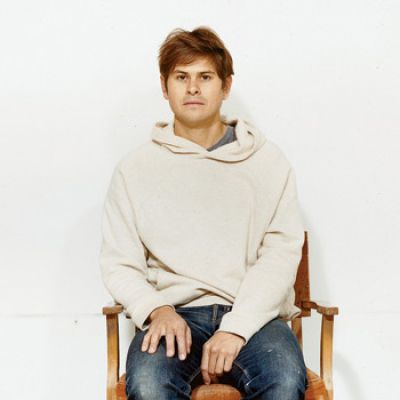
Alex Hubbard (b. 1975, Tolego, Oregon) is a Los Angeles-based artist whose work encompasses video art and painting, exploring the boundaries of each via a cross-examination that invigorates both media in new and inventive ways. Constructed along parallel lines, his videos and paintings explore composition, mass, color and depth of images in unexpected ways. Avoiding a single point of focus, Hubbard constructs his videos in layers, engulfing the viewer with bold colors, performative gestures and evolving, all-over compositions in which movement is multi-directional and time appears to be non-linear. Often described as ‘moving paintings’, the videos are a record of physical creation and destruction, with the hand of the artist tangible, and sometimes visible, in the frame.
In counterpoint to the videos, Hubbard’s paintings often suggest a mechanical means of production. Fields of color in fiberglass and resin are interrupted with richly pooled, dripped and poured paint. Working with fast-drying materials, such as epoxy and latex, the artist is forced to act quickly, embracing chance happenings and reveling in the autonomy of his chosen media. Such anti-hierarchical materials and techniques provide a corollary to the DIY aesthetic of the video works. And through this deconstruction every traditional opposition of the formal language of painting is opened up: figure and ground, material and illusionistic depth, the horizontality of production and the verticality of display.
[Simon Lee Gallery]
Alex Hubbard (b. 1975, Tolego, Oregon) is a Los Angeles-based artist whose work encompasses video art and painting, exploring the boundaries of each via a cross-examination that invigorates both media in new and inventive ways. Constructed along parallel lines, his videos and paintings explore composition, mass, color and depth of images in unexpected ways. Avoiding a single point of focus, Hubbard constructs his videos in layers, engulfing the viewer with bold colors, performative gestures and evolving, all-over compositions in which movement is multi-directional and time appears to be non-linear. Often described as ‘moving paintings’, the videos are a record of physical creation and destruction, with the hand of the artist tangible, and sometimes visible, in the frame.
In counterpoint to the videos, Hubbard’s paintings often suggest a mechanical means of production. Fields of color in fiberglass and resin are interrupted with richly pooled, dripped and poured paint. Working with fast-drying materials, such as epoxy and latex, the artist is forced to act quickly, embracing chance happenings and reveling in the autonomy of his chosen media. Such anti-hierarchical materials and techniques provide a corollary to the DIY aesthetic of the video works. And through this deconstruction every traditional opposition of the formal language of painting is opened up: figure and ground, material and illusionistic depth, the horizontality of production and the verticality of display.
[Simon Lee Gallery]
He has been the subject of recent solo exhibitions including Rose Art Museum, Brandeis University, Waltham (2014); Hammer Museum, Los Angeles (2012); The Kitchen, New York (2010); and Midway Contemporary Art, Minneapolis (2009). Hubbard’s works have also been featured in group exhibitions at Weatherspoon Art Museum, University of North Carolina at Greensboro (2016); Norton Museum of Art, West Palm Beach (2016); Whitney Museum of American Art, New York (2015); Museo Experimental del Eco, Mexico City (2014); Hessel Museum of Art, Bard College, Annandale-on-Hudson (2012); Le Consortium, Dijon (2014); and the 2010 Whitney Biennial; among others.
Works by the artist are featured in the collections of numerous institutions, including Art Institute of Chicago; Colección Jumex, Mexico City; FRAC Corsica, Corte; FRAC Poitou-Charentes, Angoulême; Henry Art Gallery, Seattle; Institute of Contemporary Art, Miami; National Gallery of Victoria, Melbourne; Seattle Art Museum; Guggenheim Museum, New York; Hammer Museum, Los Angeles; The Museum of Modern Art, New York; Walker Art Center, Minneapolis; University of Chicago; and the Whitney Museum of American Art, New York.




-
Eija-Liisa Ahtila: A Possible ImageOct 3, 2026 – Jan 31, 2027In the exhibition A Possible Image – of what is just becoming reality, Eija-Liisa Ahtila explores the interplay between humans and other forms of life within the ecological realm, and how we might understand change.
-
Sean Scully, 48Apr 18, 2026 – Dec 24, 2028LongHouse welcomes the world-renowned Irish American artist Sean Scully into the garden with his colored stack entitled 48, 2024, a work that epitomizes his deliberate use of stripes and color, with gestures toward land, sea, and sky.
-
Robert Rauschenberg & the NewsFeb 19, 2026 – Jan 4, 2027The New School Art Collection and the Vera List Center for Art and Politics are pleased to present Robert Rauschenberg & the News: Select Prints from The New School Art Collection...
-
Anna Hulačová: AbundantiaOct 1, 2026 – Jan 10, 2027
Anna Hulačová’s figurative sculptures combine influences from Surrealism, Socialist Realism, and Czech folk art to create a distinctive cosmos of their own. Schirn Kunsthalle Frankfurt is presenting the artist’s first solo exhibition in Germany…
-
Whitney Lynn: Atomic Open HouseOct 25, 2026 – Oct 24, 2027Black Cube Nomadic Art Museum is pleased to present Atomic Open House, a large-scale, site-specific artwork in Beatty, Nevada by Artist Fellow Whitney Lynn. On view outdoors from sunrise to sunset, Atomic Open House turns the architecture...
-
Ordinary GriefA Story of ReconciliationOrdinary Grief is a story of tenuous reconciliation. In 2017, I returned to Iran after 25 years of self-exile, where I embarked on a personal and political reclamation of my identity and history.
-
The Sacred Mountain / Jinjoon LeeOct 24 – Dec 19, 2026Opening at Gallery VER, Bangkok, on 24 October 2026 to mark the gallery’s 20th anniversary, Jinjoon Lee’s solo exhibition The Sacred Mountain asks what we hold sacred, and how we might sustain our relationship with nature and with machines...
-
Julie Bullard / Nadia Lee Cohen & Martin ParrPublication
Julie Bullard, a work of photographic fiction by Nadia Lee Cohen and Martin Parr. The book is designed as a late-seventies photo album, closely modelled on an example acquired from eBay, complete with faux leather spongy board covers…
-
You Should Have the BodyPrescription 175Welcome to another edition of Prescriptions. Today is June 19th, 2026. This week we saw a cage fight, a bridge we can’t use, and the art of the bad deal with Iran. An attack on Habeas Corpus is locked and loaded, and a name that was added is taken down at the Kennedy Center.
-
Carsten Höller: TwoJul 14, 2026 – Jan 31, 2027
UCCA Center for Contemporary Art presents “Carsten Höller: Two,” from July 14, 2026, to January 31, 2027. Featuring some of the artist’s most iconic works alongside a selection of new pieces, the exhibition unfolds as a “Laboratory of Doubt”…
-
Suki Seokyeong Kang: Mountain – Hour – FaceOct 30, 2026 – Jan 24, 2027Featuring nearly 40 works created between 2014 and 2024, “Suki Seokyeong Kang: Mountain—Hour—Face” is the first solo exhibition by a South Korean artist in the McNay Art Museum’s history.
-
Wolf TonesOct 3, 2026 – Apr 4, 2027
Wolf Tones presents the work of six artists as a refracted analogy of an acoustic phenomenon. The wolf tone is an irregular vibration produced by a musical instrument such as the cello. It is the result of an acoustic conflict produced by its wooden body.
-
Ralph Steadman: And Another ThingAug 26 – Dec 13, 2026Ralph Steadman is one of the most influential British graphic artists of the last 50 years. He is famous for his long collaboration with Hunter S. Thompson, notably illustrating Fear and Loathing in Las Vegas, which inspired two films in 1979 and 1998.
-
Shenzhen Art and Technology BiennaleMay 30, 2026 – Apr 30, 2027The inaugural edition of the Shenzhen Art and Technology Biennale (SATB) opens to the public from May 30, 2026, to April 30, 2027 at Shenzhen International Museum of Art (SIMoA). With its theme A Glimpse of the Infinite, this edition is directed by Zikang Zhang.
-
Ukraine, le mal qui reste / Guillaume HerbautOct 8 – Nov 29, 2026From October 8 to November 29, 2026, the Académie des beaux-arts will host the exhibition Ukraine, le mal qui reste (Ukraine, the Evil That Remains) by Guillaume Herbaut, winner of the 2024 Marc Ladreit de Lacharrière...
-
Argo: Movements of Inner and Outer NatureGwendolyn Hope GussmanArgo is a creative residency program and project space in Athens, Greece. We are open to visual artists, writers, performers, musicians, scholars, and any other creative discipline. Each residency includes accommodation, studio space, research support, and participation in a creative community.
-
American Icon: The US Flag in ArtJun 6 – Dec 6, 2026
Across generations, the Stars and Stripes has inspired pride, protest, and profound artistic expression. From battlefields to modern cultural movements, our flag’s journey through art reveals a nation constantly redefining itself.
-
Sean ScullyArtistSean Scully is one of the most important painters of his generation. While known primarily for his large-scale abstract paintings, Scully also works in a variety of diverse media, including printmaking, sculpture, watercolor and pastel.
Visit our New Announcement Submission page > Announcement Submission page >


