Andrei Arsenyevich Tarkovsky (1932–1986) was a Soviet filmmaker, writer, film editor, film theorist, theatre and opera director.
Tarkovsky’s films include Ivan’s Childhood (1962), Andrei Rublev (1966), Solaris (1972), Mirror (1975), and Stalker (1979). He directed the first five of his seven feature films in the Soviet Union; his last two films, Nostalghia (1983) and The Sacrifice (1986), were produced in Italy and Sweden, respectively. His work is characterized by long takes, unconventional dramatic structure, distinctly authored use of cinematography, and spiritual and metaphysical themes.
Tarkovsky’s works Andrei Rublev, Mirror, and Stalker are regularly listed among the greatest films of all time. His contribution to cinema was so influential that works done in a similar way are described as Tarkovskian. [Wikipedia]
“Tarkovsky for me is the greatest (director), the one who invented a new language, true to the nature of film, as it captures life as a reflection, life as a dream.” –Ingmar Bergman
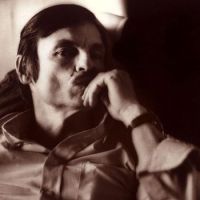
Andrei Arsenyevich Tarkovsky (1932–1986) was a Soviet filmmaker, writer, film editor, film theorist, theatre and opera director.
Tarkovsky’s films include Ivan’s Childhood (1962), Andrei Rublev (1966), Solaris (1972), Mirror (1975), and Stalker (1979). He directed the first five of his seven feature films in the Soviet Union; his last two films, Nostalghia (1983) and The Sacrifice (1986), were produced in Italy and Sweden, respectively. His work is characterized by long takes, unconventional dramatic structure, distinctly authored use of cinematography, and spiritual and metaphysical themes.
Tarkovsky’s works Andrei Rublev, Mirror, and Stalker are regularly listed among the greatest films of all time. His contribution to cinema was so influential that works done in a similar way are described as Tarkovskian. [Wikipedia]
“Tarkovsky for me is the greatest (director), the one who invented a new language, true to the nature of film, as it captures life as a reflection, life as a dream.” –Ingmar Bergman


-
Ukraine, le mal qui reste / Guillaume HerbautOct 8 – Nov 29, 2026From October 8 to November 29, 2026, the Académie des beaux-arts will host the exhibition Ukraine, le mal qui reste (Ukraine, the Evil That Remains) by Guillaume Herbaut, winner of the 2024 Marc Ladreit de Lacharrière...
-
Sacha TurchiArtistSacha Turchi currently lives and works in Italy and collaborates with various visual and sound artists. The interactions between individual and nature, body and psyche, constitutes the essential matrix of her research.
-
The Other Side of the MountainOct 14, 2026 – Mar 21, 2027
The Other side of the Mountain brings together contemporary artists working across the African continent and within the Afro-Nordic diaspora. They explore how cities and modern landscapes shape our connections to one another…
-
Robert Rauschenberg & the NewsFeb 19, 2026 – Jan 4, 2027The New School Art Collection and the Vera List Center for Art and Politics are pleased to present Robert Rauschenberg & the News: Select Prints from The New School Art Collection...
-
Constellations: Contemporary Jewelry from the Dallas Museum of ArtJul 10, 2026 – Jan 3, 2027
“Constellations: Contemporary Jewelry from the Dallas Museum of Art” showcases more than 350 works from one of the most significant contemporary jewelry collections in the United States.
-
Mohammed Sami: HostlessOct 3, 2026 – Jan 3, 2027In his new body of work Hostless, Mohammed Sami focuses predominantly on internal spaces. The paintings become a site for mnemonic processes, mental operations in which abstraction falters and something unsettling begins to seep through.
-
Luciano Fabro: Inhabiting SpaceOct 8, 2026 – Feb 21, 2027Pirelli HangarBicocca presents Abitare lo spazio: Inhabiting Space, the first museum retrospective dedicated to Luciano Fabro in Italy since the artist’s death in nearly two decades. The exhibition delves into the concept of “habitat”...
-
40th Anniversary Archival PresentationMar 19 – Dec 20, 2026The MIT List Visual Arts Center traces its origins to the Hayden Gallery (founded in 1950), which brought artists and the MIT community together through diverse exhibitions and residency projects.
-
Fondazione Arte CRT: The ProgramThrough 2027Since 2000, the Fondazione per l’Arte Moderna e Contemporanea CRT has been building a collection of modern and contemporary art for the benefit of the Piedmont community and its museum network, with acquisitions for GAM – Galleria Civica d’Arte Moderna e Contemporanea di Torino and Castello di Rivoli Museo d’Arte Contemporanea.
-
World Press Photo 2026Winners & ExhibitionsWorld Press Photo is an independent non-profit organization that champions the power of photojournalism and documentary photography to deepen understanding of the world’s complexities, promote dialogue, and inspire action.
-
Torino Art Week 2026Fall 2026This fall Turin host its annual Torino Art Week. With a shared objective of institutional and collateral art fairs, and the participation of museums, galleries and independent spaces throughout the city, Torino Art Week 2026 opens with a huge calendar…
-
Irène ZurkindenAug 27 – Nov 28, 2026Coinciding with Kunsttage Basel, this August we present a solo exhibition dedicated to the work of Swiss artist Irène Zurkinden (1909–1987) at our Basel gallery. Zurkinden defied easy categorisation, developing a distinctive painterly language...
-
William Eggleston: All That Goes UnnoticedOct 14, 2026 – Feb 21, 2027Celebrating 50 years since William Eggleston’s Guide (1976) this major exhibition showcases iconic and rarely seen dye transfer prints by an American pioneer of color photography, offering a fresh perspective...
-
Senta SimondPhotographerAfter studying aesthetic and theory of cinema at the University of Lausanne, Senta Simond completed an M.A. in Photography at ECAL, University of Art and Design in Lausanne, Switzerland.
-
Aesthetica Film Festival 2026November 4–8, 2026Aesthetica Film Festival announces its most expansive programme to date, with York set to become a meeting point for the people shaping the future of film, television, art, sound, games and immersive media this November.
-
Todd Hido: #2424-1, 1999 / #3878, 2005from the series Between the TwoPrinted Matter is thrilled to announce the second [#2424-1, 1999] and third [#3878, 2005] in a series of three fundraising Risograph-print editions by the artist Todd Hido. These two images bookend Hido’s most recent Risograph print...
-
Hybrids: Forging New Realities as Counter NarrativePublicationHYBRIDS: Forging New Realities as Counter-Narrative aims to explore the new atmosphere of trans-disciplinary experimentation across divergent fields and sectors in the arts.
-
Sarah Maple: Double LifeOct 3, 2026 – Apr 4, 2027Museum Arnhem presents Double Life, the first major solo exhibition in the Netherlands by British artist Sarah Maple (b. 1985). In her work, Maple explores what it means when different sides of her identity intersect...
Visit our New Announcement Submission page > Announcement Submission page >