

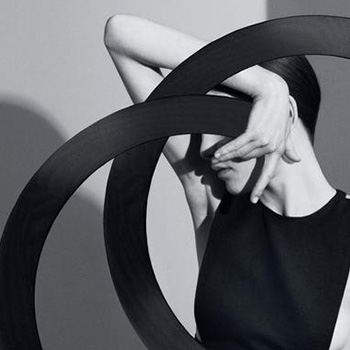


Van Herpen transcends conventional clothing norms while embracing both traditional couture artisanship and innovative techniques. Ranging from the micro to the macro, the exhibition explores the body’s place in space…


Black
One day there comes the darkness. It takes the shape of figures, pictures and objects. It absorbs light, brings confusion and anxiety. It is hard to name it and even harder to see. Darkness is emerging from the inside and overflowing into reality. Sometimes it is an explosion and sometimes only a shadow line, a feeling, melancholy. An explosion of fear and anger, a feeling of loss, melancholy, that remains after what’s gone. It lies within small things, in simple everyday activities. In figures of the imagination and in dreams: in waking dreams and in those, to which we have no access. We slowly tame it, learn to live with it, patiently waiting for it to tame us.
Infraordinaire
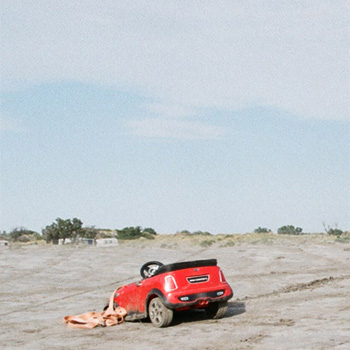
Infraordinaire focuses on what usually remains outside the field of vision—not because it is hidden, but because it is too obvious. The point of departure is everyday life understood not as a subject, but as a structure of experience: repetitive, seemingly banal, deprived of eventfulness. What interests me is not what is exceptional, but what persists in the background; not what is spectacular, but what is insistently present. The images depict fragments of reality stripped of narrative context: objects that have lost their unequivocal function. These objects are not protagonists in themselves; they operate as carriers of relations between the human subject and the space in which one attempts to dwell temporarily. The photographs do not document events, but register infra-ordinary situations: minor displacements, micro-rhythms, traces of use, signs of accumulated presence. The absence of the human figure is visible, yet it is a paradoxical absence—strongly felt through what has been left behind. Each image bears traces of a gesture: placing, covering, securing, identifying.
These are minimal gestures, often improvised, devoid of aesthetic intention, yet saturated with existential significance. The image does not serve an informational or illustrative function. It does not explain the situation. Rather, it functions as a tool of attentive suspension to articulate what usually eludes description because it appears too obvious to require language. Photography operates here as a medium of deceleration, drawing out the materiality and temporality of things that, in everyday experience, remain transparent. The project proposes a conscious shift of perspective: from exotica to endotica, from narratives about “others” to a reflection on one’s own experience of being in the world. Urban space and everyday objects are not treated as a backdrop for dramatic stories, but as active participants in relations through which the fragility of human strategies of protection, survival, and identification becomes apparent. Photography thus becomes a form of personal anthropology—not in an autobiographical sense, but a cognitive one—as a method of examining what is shared, repetitive, and rendered invisible by excess of presence.
Infraordinaire N.2. PhD series (2024)
Purposeful play of meanings, emerging between the image, which is given, and the awareness that reality is not behind it, but at most its fragmented pieces, is the fundamental intention of the cycle. It is in the play, or in the movement, that a sequence of meanings is born, transitioning from the sense of the scene’s reality to the complete negation of that reality. Despite being entirely manipulated, these photographs, since they are constructed from real registrations, can reflect one of the possible versions of reality. They are, in a sense, suspended in the space of potentiality and combinatorics.
Palermo (2024–2025)
A landscape of destruction is, after all, a landscape. Ruins can be beautiful. Seeing beauty in photos of the ruins of the World Trade Center in the months immediately after the attack had a hint of indecency, sacrilege. Most people dared only to say that the photos were ‘surreal.’ A wild euphemism, behind which lurked the dethroned notion of beauty. –Susan Sontag

Andrzej Pilichowski-Ragno
Photographer
Polish–Italian photographer and visual researcher based in Kraków.
He earned his PhD in Photography from the Academy of Fine Arts in Kraków and a degree in Liberal Arts from the Jagiellonian University, where he previously taught literary theory. His artistic practice is shaped by a long-term engagement with photographic theory, literature, and the history of images. He has been a member of the Association of Polish Art Photographers (ZPAF) for over two decades. In 2013 his work was presented at Paris Photo by Galerie Conrads (Düsseldorf).
Alongside his artistic practice, he is a professor of photography at the Kraków University of Technology and teaches at the AMA Film Academy Pilichowski-Ragno’s work explores the ontological status of the photographic image at the intersection of memory, everyday experience, and cultural residue. His projects often focus on the infra-ordinary: banal spaces, marginal situations, and apparently neutral fragments of reality that reveal latent tensions through sustained observation.
Drawing on conceptual photography, phenomenology, and literary narrative strategies, he constructs sequences rather than discrete images, emphasizing duration, repetition, and subtle shifts in perception. In this context, the photograph functions less as a document and more as a reflective surface—an object mediating between lived experience and its symbolic afterimage.
•
Black
One day there comes the darkness. It takes the shape of figures, pictures and objects. It absorbs light, brings confusion and anxiety. It is hard to name it and even harder to see. Darkness is emerging from the inside and overflowing into reality. Sometimes it is an explosion and sometimes only a shadow line, a feeling, melancholy. An explosion of fear and anger, a feeling of loss, melancholy, that remains after what’s gone. It lies within small things, in simple everyday activities. In figures of the imagination and in dreams: in waking dreams and in those, to which we have no access. We slowly tame it, learn to live with it, patiently waiting for it to tame us.
Infraordinaire
Infraordinaire focuses on what usually remains outside the field of vision—not because it is hidden, but because it is too obvious. The point of departure is everyday life understood not as a subject, but as a structure of experience: repetitive, seemingly banal, deprived of eventfulness. What interests me is not what is exceptional, but what persists in the background; not what is spectacular, but what is insistently present. The images depict fragments of reality stripped of narrative context: objects that have lost their unequivocal function. These objects are not protagonists in themselves; they operate as carriers of relations between the human subject and the space in which one attempts to dwell temporarily. The photographs do not document events, but register infra-ordinary situations: minor displacements, micro-rhythms, traces of use, signs of accumulated presence. The absence of the human figure is visible, yet it is a paradoxical absence—strongly felt through what has been left behind. Each image bears traces of a gesture: placing, covering, securing, identifying.
These are minimal gestures, often improvised, devoid of aesthetic intention, yet saturated with existential significance. The image does not serve an informational or illustrative function. It does not explain the situation. Rather, it functions as a tool of attentive suspension to articulate what usually eludes description because it appears too obvious to require language. Photography operates here as a medium of deceleration, drawing out the materiality and temporality of things that, in everyday experience, remain transparent. The project proposes a conscious shift of perspective: from exotica to endotica, from narratives about “others” to a reflection on one’s own experience of being in the world. Urban space and everyday objects are not treated as a backdrop for dramatic stories, but as active participants in relations through which the fragility of human strategies of protection, survival, and identification becomes apparent. Photography thus becomes a form of personal anthropology—not in an autobiographical sense, but a cognitive one—as a method of examining what is shared, repetitive, and rendered invisible by excess of presence.
Infraordinaire N.2. PhD series (2024)
Purposeful play of meanings, emerging between the image, which is given, and the awareness that reality is not behind it, but at most its fragmented pieces, is the fundamental intention of the cycle. It is in the play, or in the movement, that a sequence of meanings is born, transitioning from the sense of the scene’s reality to the complete negation of that reality. Despite being entirely manipulated, these photographs, since they are constructed from real registrations, can reflect one of the possible versions of reality. They are, in a sense, suspended in the space of potentiality and combinatorics.
Palermo (2024–2025)
A landscape of destruction is, after all, a landscape. Ruins can be beautiful. Seeing beauty in photos of the ruins of the World Trade Center in the months immediately after the attack had a hint of indecency, sacrilege. Most people dared only to say that the photos were ‘surreal.’ A wild euphemism, behind which lurked the dethroned notion of beauty. –Susan Sontag
-
39th Panorama of Brazilian ArtSep 12, 2026 – Jan 24, 2027Entitled After It’s All Said, 39th Panorama of Brazilian Art, under the curatorship of Diane Lima, questions where artistic production has overflowed in the search to expand the limits of aesthetic representation through a radical exercise of imagination.
-
Ahn Chang-Hong: noon-moolSep 5 – Dec 6, 2026American University Museum is honored to present noon-mool, a major solo exhibition by Korean artist Ahn Chang-Hong. Occupying both the second and third floors of the museum, the exhibition offers a rare opportunity...
-
The Coming of AgeMar 26 – Nov 29, 2026
‘The Coming of Age’ features more than 120 artworks and objects, including historical artefacts and works by contemporary artists including John Coplans, Serena Korda, Suzanne Lacy, Anna Maria Maiolino, Rory Pilgrim, Paula Rego and more.
-
Lotta Antonsson: I Am EverythingApr 25 – Nov 29, 2026One of Sweden’s leading contemporary photographers, Lotta Antonsson, is coming to Fotografiska with I Am Everything. In this exhibition, the artist explores themes of gender, identity, and objectification within a visual world
-
Sarah Maple: Double LifeOct 3, 2026 – Apr 4, 2027Museum Arnhem presents Double Life, the first major solo exhibition in the Netherlands by British artist Sarah Maple (b. 1985). In her work, Maple explores what it means when different sides of her identity intersect...
-
American Icon: The US Flag in ArtJun 6 – Dec 6, 2026
Across generations, the Stars and Stripes has inspired pride, protest, and profound artistic expression. From battlefields to modern cultural movements, our flag’s journey through art reveals a nation constantly redefining itself.
-
DocumentaOrganization / FestivalDocumenta und Museum Fridericianum gGmbH is a non-profit organization supported and funded by the City of Kassel and the State of Hesse, as well as by the German Federal Cultural Foundation.
-
Our 9th Year AnniversaryArtpil / Prescription 176Here we are again, this time, rounding out our ninth year with 7,000 pages of Articles, Profiles, and Announcements in our growing archive and over 10 million visits strong. A very exciting journey it has been ...
-
Urban Art Biennale 2026May 15 – Nov 15, 2026The URBAN ART BIENNALE is one of the world’s largest exhibitions of this anarchic art form, which transcends conventional ‘white cube’ aesthetics. Since 2011, every two years, the entire site of the Völklinger Hütte enters into dialog with this art form...
-
Bill PhelpsPhotographerBorn in St. Paul, Minnesota, Bill Phelps has built an impressive career despite having no formal art training, lending his talents to Italian Vogue, French Marie Claire, Conde Nast Traveller UK, The New York Times Magazine, Fortune, and Interview, and picking up both an IPA Lucie Award and the Grand Prize of Portraits for the World Press Photo.
-
Fritz ScholderApr 25 – Oct 25, 2026In a softly shimmering blue, then brown, then green, then gray, then pink, then green, then violet, then blue again, the colors of present day New Mexico landscapes are layered horizontally.
-
OFFSCREEN: 5th editionOctober 20–25, 2026OFFSCREEN Paris is a nomadic event that values contemporary, historic and avant-garde artists with image-based practices. With its distinct voice, it is a must-see highlight of Paris Art Week each October...
-
untame flow stay releaseAug 31 – Nov 29, 2026untame flow stay release presents artistic practices undertaken in response to unjust, environmentally toxic and ableist structures – systems that continue to suppress individuals and communities by individualizing violence...
-
2027 Brooks International Fellowship ProgrammeDeadline: October 21, 2026
Tate, in collaboration with Delfina Foundation, invites applications for the Brooks International Fellowship Programme 2027. Now in its thirteenth year, the programme will enable practitioners to work with Tate…
-
Extreme PresenceOctober 23–25, 2026What forms does presence take when the world and its technologies exceed what can be explained, known, or felt? How to re-imagine human, non-human and synthetic life on this planet today?
-
Forever Marked By The DayJun 26, 2026 – Jan 3, 2027Reflecting on loss, resilience and the power of rebuilding, “Forever Marked By The Day: A Quarter Century of Mourning and Renewal” marks 25 years since the attacks on Sept. 11, 2001. Approached through an architectural lens, the exhibition fosters intergenerational dialogue...
-
Hybrids: Forging New Realities as Counter NarrativePublicationHYBRIDS: Forging New Realities as Counter-Narrative aims to explore the new atmosphere of trans-disciplinary experimentation across divergent fields and sectors in the arts.
SUBMIT YOUR ANNOUNCEMENTS
Visit our New Announcement Submission page > Announcement Submission page >
Visit our New Announcement Submission page > Announcement Submission page >