
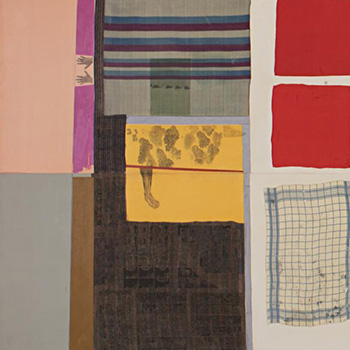

Founded in 1983, Thaddaeus Ropac has galleries across Europe and Asia, located in London, Paris, Salzburg and Seoul.
Specialising in contemporary art and representing over 60 artists, the gallery supports and showcases the careers of some of the most influential artists today with a wide-ranging programme of over 40 exhibitions curated at the six extensive and historic gallery spaces each year.
Thaddaeus Ropac also represents a number of renowned artist estates and continues to build on their legacy, as well as providing curatorial expertise, acting as consultant to major museums and public institutions and advising private and corporate collections. Active in both the primary and secondary markets, the gallery also represents its artists at all major international art fairs. We run our own publishing house, producing catalogues and books to accompany exhibitions, contributing to new scholarship and a wider art-historical discourse by inviting prominent art historians, curators and writers to collaborate.
Thaddaeus Ropac’s galleries, which span a total of 12,000 square metres, are located in London at Ely House, a five-floor listed mansion in Mayfair that was formerly the Bishop of Ely’s London residence; in Paris both in the Marais and an extensive early 20th-century ironworks factory in Pantin, which was redeveloped to accommodate the display of large-scale artworks; in Salzburg at the Villa Kast, a 19th-century townhouse in the Mirabell Gardens in the historic centre and Salzburg Halle, a converted industrial space close to the city centre; and in Seoul, in the heart of the thriving cultural district of Hannam-dong, occupying the ground and first floors of an outstanding architectural landmark: the Fort Hill building.
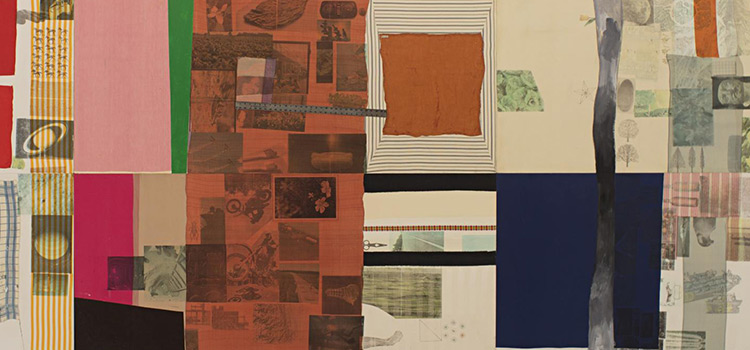

Robert Rauschenberg, Bio/Top: Half a Grandstand, 1978 (detail) / Main: Untitled, 1981 / Courtesy Galerie Thaddaeus Ropac © Robert Rauschenberg/DACS |


Founded in 1983, Thaddaeus Ropac has galleries across Europe and Asia, located in London, Paris, Salzburg and Seoul.
Specialising in contemporary art and representing over 60 artists, the gallery supports and showcases the careers of some of the most influential artists today with a wide-ranging programme of over 40 exhibitions curated at the six extensive and historic gallery spaces each year.
Thaddaeus Ropac also represents a number of renowned artist estates and continues to build on their legacy, as well as providing curatorial expertise, acting as consultant to major museums and public institutions and advising private and corporate collections. Active in both the primary and secondary markets, the gallery also represents its artists at all major international art fairs. We run our own publishing house, producing catalogues and books to accompany exhibitions, contributing to new scholarship and a wider art-historical discourse by inviting prominent art historians, curators and writers to collaborate.
Thaddaeus Ropac’s galleries, which span a total of 12,000 square metres, are located in London at Ely House, a five-floor listed mansion in Mayfair that was formerly the Bishop of Ely’s London residence; in Paris both in the Marais and an extensive early 20th-century ironworks factory in Pantin, which was redeveloped to accommodate the display of large-scale artworks; in Salzburg at the Villa Kast, a 19th-century townhouse in the Mirabell Gardens in the historic centre and Salzburg Halle, a converted industrial space close to the city centre; and in Seoul, in the heart of the thriving cultural district of Hannam-dong, occupying the ground and first floors of an outstanding architectural landmark: the Fort Hill building.
Robert Rauschenberg, Bio/Top: Half a Grandstand, 1978 (detail) / Main: Untitled, 1981 / Courtesy Galerie Thaddaeus Ropac © Robert Rauschenberg/DACS |





-
ApertureFoundation / MagazineAperture, a not-for-profit foundation, connects the photo community and its audiences with the most inspiring work, the sharpest ideas, and with each other, in print, in person, and online.
-
Alec SothPhotographerAlec Soth’s work is rooted in the distinctly American tradition of ‘on-the-road photography’ developed by Walker Evans, Robert Frank, and Stephen Shore. From Huckleberry Finn to Easy Rider...
-
Alex PragerPhotographerAlex Prager’s works are in collections of National Gallery of Victoria, Melbourne, The Museum of Modern Art, New York, The Whitney Museum of American Art, New York, Kunsthaus Zürich, Moderna Museet, Stockholm, and San Francisco Museum of Modern Art.
-
Forever Marked By The DayJun 26, 2026 – Jan 3, 2027Reflecting on loss, resilience and the power of rebuilding, “Forever Marked By The Day: A Quarter Century of Mourning and Renewal” marks 25 years since the attacks on Sept. 11, 2001. Approached through an architectural lens, the exhibition fosters intergenerational dialogue...
-
Petra Collins: StarBy Gaelin Rosenwaks
Inspired by 16 years of shooting some of the biggest names in the music world, witnessing the rise and fall of pop icons, and watching descents into madness, Collins created two fictional music groups exclusively for this publication.
-
Orgasmagoria by Dries VerhoevenNov 28, 2026 – Mar 6, 2027Starting November 28, Brutus Art Space will present Orgasmagoria (2026), an ongoing film by artist Dries Verhoeven about sexual gratification in the digital age. The work will premiere in November at the International Documentary Film Festival Amsterdam (IDFA).
-
American Icon: The US Flag in ArtJun 6 – Dec 6, 2026
Across generations, the Stars and Stripes has inspired pride, protest, and profound artistic expression. From battlefields to modern cultural movements, our flag’s journey through art reveals a nation constantly redefining itself.
-
30 Under 30 Women Photographers / 2026 TAWNov 1 – Dec 12, 2026At the occasion of and in collaboration with Torino Art Week, Artpil proudly presents the online exhibition of the 17th Edition of the annual selection of 30 Under 30 Women Photographers 2026 taking place November 1 – December 12, 2026....
-
Relic 4: Larry AchiampongOct 16 – Dec 12, 2026This autumn, Larry Achiampong will present his new film Relic 4 (2026) at KARST, revisiting the cinematic universe of the Relic Traveller project after a six-year hiatus. Exploring themes of fallen empire, class, and displacement...
-
I Want To See A Lighthouseby Gary Briechle
Gary Briechle’s practice is disciplined, almost monastic. Every day roving around Rockland, Maine in an SUV loaded with chemicals, looking at the same mundane scenes and subjects, but expecting different results.
-
Ahn Chang-Hong: noon-moolSep 5 – Dec 6, 2026American University Museum is honored to present noon-mool, a major solo exhibition by Korean artist Ahn Chang-Hong. Occupying both the second and third floors of the museum, the exhibition offers a rare opportunity...
-
39th Panorama of Brazilian ArtSep 12, 2026 – Jan 24, 2027Entitled After It’s All Said, 39th Panorama of Brazilian Art, under the curatorship of Diane Lima, questions where artistic production has overflowed in the search to expand the limits of aesthetic representation through a radical exercise of imagination.
-
Venice Biennale 202661st International Art ExhibitionThe 61st International Art Exhibition of La Biennale di Venezia – In Minor Keys by Koyo Kouoh (1967–2025) – will run from Saturday 9 May to Sunday 22 November 2026 (preview 6, 7, 8 May) at the Giardini and the Arsenale venues, and in various locations around Venice.
-
The Other Side of the MountainOct 14, 2026 – Mar 21, 2027
The Other side of the Mountain brings together contemporary artists working across the African continent and within the Afro-Nordic diaspora. They explore how cities and modern landscapes shape our connections to one another…
-
Shenzhen Art and Technology BiennaleMay 30, 2026 – Apr 30, 2027The inaugural edition of the Shenzhen Art and Technology Biennale (SATB) opens to the public from May 30, 2026, to April 30, 2027 at Shenzhen International Museum of Art (SIMoA). With its theme A Glimpse of the Infinite, this edition is directed by Zikang Zhang.
-
Fondation BeyelerMuseum / Riehen, SwitzerlandThe Fondation Beyeler is a museum of modern and contemporary art open 365 days a year. Its exhibitions of renowned artists of the 19th, 20th, and 21st centuries have brought the museum international recognition and established it as Switzerland’s most popular art museum.
-
Lotta Antonsson: I Am EverythingApr 25 – Nov 29, 2026One of Sweden’s leading contemporary photographers, Lotta Antonsson, is coming to Fotografiska with I Am Everything. In this exhibition, the artist explores themes of gender, identity, and objectification within a visual world
-
Wolf TonesOct 3, 2026 – Apr 4, 2027
Wolf Tones presents the work of six artists as a refracted analogy of an acoustic phenomenon. The wolf tone is an irregular vibration produced by a musical instrument such as the cello. It is the result of an acoustic conflict produced by its wooden body.
Visit our New Announcement Submission page > Announcement Submission page >


