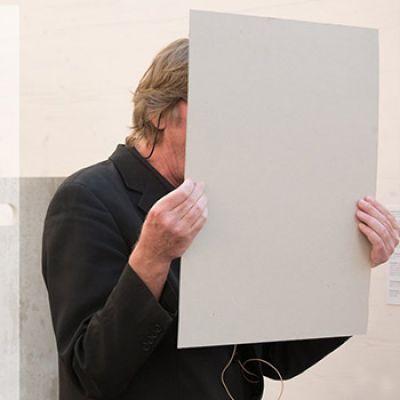
Heinrich Dunst was born in 1955 in Hallein (Salzburg, Austria), He lives and works in Vienna. Dunst creates spatial interventions and performances that navigate the gap between what can be seen and what can be said, the untranslatability of one form into another, and the contextual nature of spatial presentations. Dunst’s conceptual approach is rooted both in the work of artists like Marcel Broodthaers who scrutinize the systems underlying the perception of words and images, and in the Viennese scene of the 1980s and its characteristic ambition to extend abstract painting into the exhibition space. He lends these complex issues fresh interest by developing forms into correlations and pointedly questioning the seemingly unequivocal meaning of the elements through variation, superimposition, and changes of direction.
[KOW]
Heinrich Dunst was born in 1955 in Hallein (Salzburg, Austria), He lives and works in Vienna. Dunst creates spatial interventions and performances that navigate the gap between what can be seen and what can be said, the untranslatability of one form into another, and the contextual nature of spatial presentations. Dunst’s conceptual approach is rooted both in the work of artists like Marcel Broodthaers who scrutinize the systems underlying the perception of words and images, and in the Viennese scene of the 1980s and its characteristic ambition to extend abstract painting into the exhibition space. He lends these complex issues fresh interest by developing forms into correlations and pointedly questioning the seemingly unequivocal meaning of the elements through variation, superimposition, and changes of direction.
[KOW]

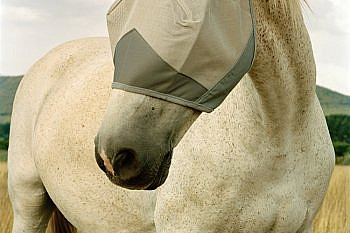
Untitled, 2014 / KOW




-
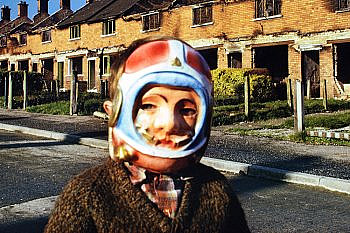
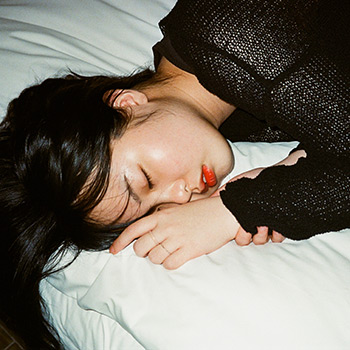
Luo Yang: GirlsPublicationLuo Yang, female, born in 1984, liaoning Province China. Graduated from the lu Xun academy of Fine arts, now lives and works in Beijing as a freelance photographer. Girls has been an ongoing photography project since 2007, and has involved me shooting the girls around me...
-
Orgasmagoria by Dries VerhoevenNov 28, 2026 – Mar 6, 2027Starting November 28, Brutus Art Space will present Orgasmagoria (2026), an ongoing film by artist Dries Verhoeven about sexual gratification in the digital age. The work will premiere in November at the International Documentary Film Festival Amsterdam (IDFA).
-
Ahn Chang-Hong: noon-moolSep 5 – Dec 6, 2026American University Museum is honored to present noon-mool, a major solo exhibition by Korean artist Ahn Chang-Hong. Occupying both the second and third floors of the museum, the exhibition offers a rare opportunity...
-
Arnold J. Kemp: Not One ThingJul 28 – Dec 6, 2026
Arnold J. Kemp: Not One Thing is the first institutional survey of work by the Chicago-based artist Arnold J. Kemp (b. 1968, Boston). The exhibition focuses on Kemp’s performative and material tendencies of masking, traced through various media.
-
Anselm KieferArtistAnselm Kiefer was born in 1945, in Donaueschingen in the German state of Baden-Württemberg. After taking courses in law at Albert-Ludwigs-Universität in Freiburg from 1965 to 1966, he studied art there under Peter Dreher.
-
Interview with Saul LeiterBy David Gibson“History of art is a history of great things neglected and ignored and mediocre things being admired. At different times things are different. The history of photography is a history of changes.” –Saul Leiter
-
Sarah Maple: Double LifeOct 3, 2026 – Apr 4, 2027Museum Arnhem presents Double Life, the first major solo exhibition in the Netherlands by British artist Sarah Maple (b. 1985). In her work, Maple explores what it means when different sides of her identity intersect...
-
Calculating Empires / Kate Crawford & Vladan JolerNov 27, 2025 – Jan 31, 2027The monumental installation Calculating Empires impressively demonstrates how power and technology have been intertwined for centuries. The work, by artist-researchers Kate Crawford and Vladan Joler, and has been acquired by Rijksmuseum Twenthe...
-
Fondation BeyelerMuseum / Riehen, SwitzerlandThe Fondation Beyeler is a museum of modern and contemporary art open 365 days a year. Its exhibitions of renowned artists of the 19th, 20th, and 21st centuries have brought the museum international recognition and established it as Switzerland’s most popular art museum.
-
American Icon: The US Flag in ArtJun 6 – Dec 6, 2026
Across generations, the Stars and Stripes has inspired pride, protest, and profound artistic expression. From battlefields to modern cultural movements, our flag’s journey through art reveals a nation constantly redefining itself.
-
David Novros: PaintingOct 9, 2026 – Feb 21, 2027The Hamburger Kunsthalle is devoting a large-scale retrospective to the painter David Novros (b. 1941 in Los Angeles, California), showcasing a fascinating body of work spanning more than six decades.
-
Sean Scully, 48Apr 18, 2026 – Dec 24, 2028LongHouse welcomes the world-renowned Irish American artist Sean Scully into the garden with his colored stack entitled 48, 2024, a work that epitomizes his deliberate use of stripes and color, with gestures toward land, sea, and sky.
-
World Press Photo 2026Winners & ExhibitionsWorld Press Photo is an independent non-profit organization that champions the power of photojournalism and documentary photography to deepen understanding of the world’s complexities, promote dialogue, and inspire action.
-
The Art of SolitudeMark FearnleyDiscover this fascinating photography book with works by London-based Fine Art Photographer Mark Fearnley. His extraordinary images range from street photography to abstract textures and geometric compositions....
-
Mohammed Sami: HostlessOct 3, 2026 – Jan 3, 2027In his new body of work Hostless, Mohammed Sami focuses predominantly on internal spaces. The paintings become a site for mnemonic processes, mental operations in which abstraction falters and something unsettling begins to seep through.
-
Wolf TonesOct 3, 2026 – Apr 4, 2027
Wolf Tones presents the work of six artists as a refracted analogy of an acoustic phenomenon. The wolf tone is an irregular vibration produced by a musical instrument such as the cello. It is the result of an acoustic conflict produced by its wooden body.
-
Forever Marked By The DayJun 26, 2026 – Jan 3, 2027Reflecting on loss, resilience and the power of rebuilding, “Forever Marked By The Day: A Quarter Century of Mourning and Renewal” marks 25 years since the attacks on Sept. 11, 2001. Approached through an architectural lens, the exhibition fosters intergenerational dialogue...
-
Ralph Steadman: And Another ThingAug 26 – Dec 13, 2026Ralph Steadman is one of the most influential British graphic artists of the last 50 years. He is famous for his long collaboration with Hunter S. Thompson, notably illustrating Fear and Loathing in Las Vegas, which inspired two films in 1979 and 1998.
Visit our New Announcement Submission page > Announcement Submission page >