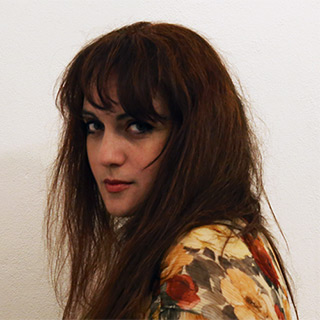
Helga Paris (1938–2024) was born in Gollnow, Pomerania. She studied fashion design before she took up photography as an autodidact in 1964. Her style is characterized by lyricism that defies interpretation or ideologizing.
The photographer was interested in everyday, sometimes fairly mundane moments of interaction, namely relations, glances, gestures, movements, superficial structures and spaces revealing the circumstances, stories and experiences of people and objects, as well as the ways to deal with these circumstances.
During her travels to Transylvania (then People’s Republic of Romania), Georgia (then part of the USSR), Volgograd (Russia) and New York (USA), Helga Paris shortened the distance between herself and the locals in the same unbiased manner she communicated with her neighbours back home, the young people of Berlin, the women workers at the textile factory or the houses and individuals in the industrial city of Halle in central Germany.
Helga Paris had a talent for spotting and revealing vulnerabilities and insecurities, while wrapping them at the same time in delicateness. The self-taught photographer’s view was shaped and influenced by the paintings of Max Beckmann and Francis Bacon, as well as by postwar Italian and French cinema, theater and literature and she would stick to it regardless of whether she was taking photographs around East Berlin’s working class quarter of Prenzlauer Berg or the industrial city of Halle, or she was travelling around Bulgaria, Georgia, Romania, Poland and Italy. Growing up in World War II and the postwar years of recovery and hope may have contributed to the special poetic quality of the photographer’s visual world.
[Sofia City Art Gallery]




-
Panorama: Dreams and PlacesFeb 19 – Oct 18, 2026Aiming to present a thematic narrative on contemporary photography and lens-based art in Türkiye, “Panorama: Dreams and Places” brings together a comprehensive selection of works produced since the 2010s by 18 artists from different generations.
-
Making Futures 2026: International Research ConferenceOctober 29–31, 2026For its 2026 international conference, Making Futures (TM) will explore the relationship between objects, material intelligence and the emotional encounters we design with and through the natural world around us.
-
American Icon: The US Flag in ArtJun 6 – Dec 6, 2026
Across generations, the Stars and Stripes has inspired pride, protest, and profound artistic expression. From battlefields to modern cultural movements, our flag’s journey through art reveals a nation constantly redefining itself.
-
New Humans: Memories of the FutureMar 21, 2026 - OngoingNew Humans: Memories of the Future will inaugurate the New Museum’s expanded building with an exploration of artists’ enduring preoccupation with what it means to be human in the face of sweeping technological changes. New Humans will trace a diagonal history of the twentieth and twenty-first centuries...
-
Ukrainian Institute of Modern ArtMuseum / ChicagoThe Institute was founded in 1971 through the initiative of art collectors Dr. Achilles and Vera Chreptowsky, and sculptors Konstantin Milonadis and Mychajlo Urban. They wanted to fill a void in the public’s understanding of nationally and internationally recognized Ukrainian artists engaged with contemporary art.
-
Irène ZurkindenAug 27 – Nov 28, 2026Coinciding with Kunsttage Basel, this August we present a solo exhibition dedicated to the work of Swiss artist Irène Zurkinden (1909–1987) at our Basel gallery. Zurkinden defied easy categorisation, developing a distinctive painterly language...
-
Oulu2026: PlayJan 14 – Dec 31, 2026Fotografiska Tallinn brings a photo exhibition to Finland for the first time. Entitled PLAY, the group exhibition is part of the European Capital of Culture programme...
-
The Present as FoundOctober 2–23, 2026The divergent creative practices of this year’s Zvono Award finalists – Ljiljana Arsić, Isidora Branković, Mustafa Mlinarević, and Emina Veladžić – have shaped a media-heterogeneous, methodologically diverse, and conceptually multilayered exhibition.
-
Afterlife Film ProgramSep 5 – Dec 18, 2026Death is one of the few universal experiences of the human condition and, at the same time, one of the most mysterious. Throughout history, religions, spiritual traditions, philosophical schools of thought, and even science have sought to answer the same question...
-
You Should Have the BodyPrescription 175Welcome to another edition of Prescriptions. Today is June 19th, 2026. This week we saw a cage fight, a bridge we can’t use, and the art of the bad deal with Iran. An attack on Habeas Corpus is locked and loaded, and a name that was added is taken down at the Kennedy Center.
-
Shenzhen Art and Technology BiennaleMay 30, 2026 – Apr 30, 2027The inaugural edition of the Shenzhen Art and Technology Biennale (SATB) opens to the public from May 30, 2026, to April 30, 2027 at Shenzhen International Museum of Art (SIMoA). With its theme A Glimpse of the Infinite, this edition is directed by Zikang Zhang.
-
OFFSCREEN: 5th editionOctober 20–25, 2026OFFSCREEN Paris is a nomadic event that values contemporary, historic and avant-garde artists with image-based practices. With its distinct voice, it is a must-see highlight of Paris Art Week each October...
-
Doug Aitkenartist / filmmakerDoug Aitken is an American artist and filmmaker. Defying definitions of genre, he explores every medium, from film and installations to architectural interventions.
-
Relic 4: Larry AchiampongOct 16 – Dec 12, 2026This autumn, Larry Achiampong will present his new film Relic 4 (2026) at KARST, revisiting the cinematic universe of the Relic Traveller project after a six-year hiatus. Exploring themes of fallen empire, class, and displacement...
-
Ralph Steadman: And Another ThingAug 26 – Dec 13, 2026Ralph Steadman is one of the most influential British graphic artists of the last 50 years. He is famous for his long collaboration with Hunter S. Thompson, notably illustrating Fear and Loathing in Las Vegas, which inspired two films in 1979 and 1998.
-
Arnold J. Kemp: Not One ThingJul 28 – Dec 6, 2026
Arnold J. Kemp: Not One Thing is the first institutional survey of work by the Chicago-based artist Arnold J. Kemp (b. 1968, Boston). The exhibition focuses on Kemp’s performative and material tendencies of masking, traced through various media.
-
Calculating Empires / Kate Crawford & Vladan JolerNov 27, 2025 – Jan 31, 2027The monumental installation Calculating Empires impressively demonstrates how power and technology have been intertwined for centuries. The work, by artist-researchers Kate Crawford and Vladan Joler, and has been acquired by Rijksmuseum Twenthe...
-
Art Week Tokyo 2026November 4–8, 2026
Art Week Tokyo 2026 expands its activation of the city’s diverse array of museums and art spaces. New institutional highlights include Nam June Paik: The 20th Anniversary of His Passing at Watari-um…
Visit our New Announcement Submission page > Announcement Submission page >