


RELATED ARTICLES


Henri Cartier-Bresson
Photographer
To take a photograph is to align the head, the eye and the heart. It’s a way of life.
–Henri Cartier-Bresson (1908-2004)
Born in Chanteloup, Seine-et-Marne, Henri Cartier-Bresson developed a strong fascination with painting early on, and particularly with Surrealism. In 1932, after spending a year in the Ivory Coast, he discovered the Leica – his camera of choice thereafter – and began a life-long passion for photography. In 1933 he had his first exhibition at the Julien Levy Gallery in New York. He later made films with Jean Renoir.
Taken prisoner of war in 1940, he escaped on his third attempt in 1943 and subsequently joined an underground organization to assist prisoners and escapees. In 1945 he photographed the liberation of Paris with a group of professional journalists and then filmed the documentary Le Retour (The Return).
In 1947, with Robert Capa, George Rodger, David ‘Chim’ Seymour and William Vandivert, he founded Magnum Photos. After three years spent travelling in the East, in 1952 he returned to Europe, where he published his first book, Images à la Sauvette (published in English as The Decisive Moment).
He explained his approach to photography in these terms, “For me the camera is a sketch book, an instrument of intuition and spontaneity, the master of the instant which, in visual terms, questions and decides simultaneously. It is by economy of means that one arrives at simplicity of expression.”
From 1968 he began to curtail his photographic activities, preferring to concentrate on drawing and painting. In 2003, with his wife and daughter, he created the Fondation Henri Cartier-Bresson in Paris for the preservation of his work. Cartier-Bresson received an extraordinary number of prizes, awards and honorary doctorates. He died at his home in Provence on 3 August 2004, a few weeks short of his 96th birthday.
•
RELATED ARTICLES





-
Nadav Kander: The Edge of ThingsSep 18, 2026 – Jan 20, 2027Foam presents The Edge of Things, a major solo exhibition of the internationally renowned artist Nadav Kander. Over more than three decades, Kander has created some of the most celebrated images in contemporary photography...
-
Panorama: Dreams and PlacesFeb 19 – Oct 18, 2026Aiming to present a thematic narrative on contemporary photography and lens-based art in Türkiye, “Panorama: Dreams and Places” brings together a comprehensive selection of works produced since the 2010s by 18 artists from different generations.
-
40th Anniversary Archival PresentationMar 19 – Dec 20, 2026The MIT List Visual Arts Center traces its origins to the Hayden Gallery (founded in 1950), which brought artists and the MIT community together through diverse exhibitions and residency projects.
-
American Icon: The US Flag in ArtJun 6 – Dec 6, 2026
Across generations, the Stars and Stripes has inspired pride, protest, and profound artistic expression. From battlefields to modern cultural movements, our flag’s journey through art reveals a nation constantly redefining itself.
-
The Coming of AgeMar 26 – Nov 29, 2026
‘The Coming of Age’ features more than 120 artworks and objects, including historical artefacts and works by contemporary artists including John Coplans, Serena Korda, Suzanne Lacy, Anna Maria Maiolino, Rory Pilgrim, Paula Rego and more.
-
Rencontres d’ArlesPhotography FestivalEvery summer since 1970, over the course of more than forty exhibitions at various of the city’s exceptional heritage sites, the Rencontres d’Arles has been a major influence in disseminating the best of world photography...
-
Wolf TonesOct 3, 2026 – Apr 4, 2027
Wolf Tones presents the work of six artists as a refracted analogy of an acoustic phenomenon. The wolf tone is an irregular vibration produced by a musical instrument such as the cello. It is the result of an acoustic conflict produced by its wooden body.
-
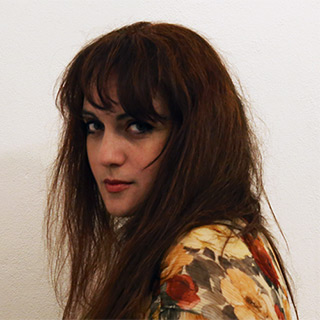
Lise SarfatiPhotographerBorn in 1958 in Oran, Algeria Lise Sarfati lives and works between Paris and Los Angeles and is represented by Yossi Milo Gallery, NY, Rose Gallery, LA, La Galerie Particulière, Paris.
-
Making Futures 2026: International Research ConferenceOctober 29–31, 2026For its 2026 international conference, Making Futures (TM) will explore the relationship between objects, material intelligence and the emotional encounters we design with and through the natural world around us.
-
Mark RothkoArtist / PainterMark Rothko was born Marcus Rothkowitz on September 25, 1903, in Dvinsk, Russia. In 1913 his family left Russia and settled in Portland, Oregon. Rothko attended Yale University, New Haven, on a scholarship from 1921 to 1923.
-
I Want To See A Lighthouseby Gary Briechle
Gary Briechle’s practice is disciplined, almost monastic. Every day roving around Rockland, Maine in an SUV loaded with chemicals, looking at the same mundane scenes and subjects, but expecting different results.
-
World Press Photo 2026Winners & ExhibitionsWorld Press Photo is an independent non-profit organization that champions the power of photojournalism and documentary photography to deepen understanding of the world’s complexities, promote dialogue, and inspire action.
-
Visionary LandscapesOct 1 – Dec 16, 2026Swedenborg House is pleased to announce Visionary Landscapes, an exhibition exploring the relationship between landscape, imagination and visionary states. Curated by Museum Director Stephen McNeilly, the exhibition brings together historic works in dialogue...
-
Art Week Tokyo 2026November 4–8, 2026
Art Week Tokyo 2026 expands its activation of the city’s diverse array of museums and art spaces. New institutional highlights include Nam June Paik: The 20th Anniversary of His Passing at Watari-um…
-
Afterlife Film ProgramSep 5 – Dec 18, 2026Death is one of the few universal experiences of the human condition and, at the same time, one of the most mysterious. Throughout history, religions, spiritual traditions, philosophical schools of thought, and even science have sought to answer the same question...
-
Robert Rauschenberg & the NewsFeb 19, 2026 – Jan 4, 2027The New School Art Collection and the Vera List Center for Art and Politics are pleased to present Robert Rauschenberg & the News: Select Prints from The New School Art Collection...
-
Housekeeping in a Dangerous TimeApr 24 – Dec 31, 2026Housekeeping in a Dangerous Time looks into artistic practices that engage with the contemporary forces shaping intergenerational ties and the distinctions between life stages.
-
The 90sOct 8, 2026 – Feb 14, 2027Guest curated by fashion industry game changer Edward Enninful OBE, whose lived experience of the decade informs the exhibition The 90s examines a defining period in which a groundswell of creativity changed
SUBMIT YOUR ANNOUNCEMENTS
Visit our New Announcement Submission page > Announcement Submission page >
Visit our New Announcement Submission page > Announcement Submission page >


