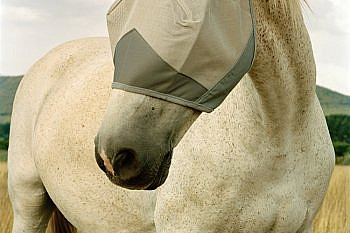


Julie Bullard, a work of photographic fiction by Nadia Lee Cohen and Martin Parr. The book is designed as a late-seventies photo album, closely modelled on an example acquired from eBay, complete with faux leather spongy board covers…


These portraits are not intended as celebrity illustrations in the conventional sense. I draw musicians, filmmakers, writers, artists and thinkers whose work has entered my own cultural memory and changed the way I understand images, bodies, language and resistance.
The series functions as a personal counter-archive. I am interested in figures who carry contradiction, vulnerability, outsider positions or formal rupture. Through distortion, exposed marks and a grotesque visual language, I try to move the portrait away from admiration or likeness and toward tension: between the public image and the fragile body, the icon and the individual, cultural memory and personal experience.
–İlker Ortaç

Ilker Ortac
Artist
İlker Ortaç is an Istanbul-based artist, illustrator and writer whose multidisciplinary practice moves between drawing, literature, photography and film. His work explores the body, disability, identity, social exclusion, urban life and the cultural figures that shape collective memory.
Working with an expressive, grotesque and underground visual language, Ortaç approaches portraiture as something more than likeness. Musicians, filmmakers, writers, artists and thinkers appear in his drawings as fragile, distorted and psychologically charged figures. Rather than polished or idealised representations, his portraits emphasise vulnerability, tension, imperfection and the marks carried by the body.
The figures in these works are not selected as celebrity tributes. Ortaç draws people whose music, films, writing, thought or public presence have shaped his own cultural memory, and whose work often unsettles established forms, identities or ways of seeing. By placing figures from alternative music, cinema, literature and contemporary visual culture within the same visual field, he constructs a personal counter-archive: a network of influences connected by artistic rupture, outsider positions, contradiction and resistance to idealisation.
Ortaç is also the author of three published books – İkinci El Bakire, Sidik and Kaybetme Hırsı – and has worked in monochrome portrait photography and independent short film. Across disciplines, his practice remains concerned with bodies and identities that resist normalisation and easy categorisation.
He lives and works in Istanbul.
•
These portraits are not intended as celebrity illustrations in the conventional sense. I draw musicians, filmmakers, writers, artists and thinkers whose work has entered my own cultural memory and changed the way I understand images, bodies, language and resistance.
The series functions as a personal counter-archive. I am interested in figures who carry contradiction, vulnerability, outsider positions or formal rupture. Through distortion, exposed marks and a grotesque visual language, I try to move the portrait away from admiration or likeness and toward tension: between the public image and the fragile body, the icon and the individual, cultural memory and personal experience.
–İlker Ortaç
-
Nadav Kander: The Edge of ThingsSep 18, 2026 – Jan 20, 2027Foam presents The Edge of Things, a major solo exhibition of the internationally renowned artist Nadav Kander. Over more than three decades, Kander has created some of the most celebrated images in contemporary photography...
-
Performing Arts Season2026–2027In today’s world, our commitment to connecting community with world-class creative innovators has never been more vital. Vanguard dance, music, and adventurous theater artists offer fresh ideas and energy, while bringing us together...
-
Luciano Fabro: Inhabiting SpaceOct 8, 2026 – Feb 21, 2027Pirelli HangarBicocca presents Abitare lo spazio: Inhabiting Space, the first museum retrospective dedicated to Luciano Fabro in Italy since the artist’s death in nearly two decades. The exhibition delves into the concept of “habitat”...
-
Housekeeping in a Dangerous TimeApr 24 – Dec 31, 2026Housekeeping in a Dangerous Time looks into artistic practices that engage with the contemporary forces shaping intergenerational ties and the distinctions between life stages.
-
Uri Aran: Look How Hard They WorkOct 23, 2026 – Feb 28, 2027Uri Aran arranges objects and images the way one might spatially illustrate a scene with whatever is on a dinner table, letting a salt shaker stand for a person and a napkin for a museum, for example.
-
Visionary LandscapesOct 1 – Dec 16, 2026Swedenborg House is pleased to announce Visionary Landscapes, an exhibition exploring the relationship between landscape, imagination and visionary states. Curated by Museum Director Stephen McNeilly, the exhibition brings together historic works in dialogue...
-
Ordinary GriefA Story of ReconciliationOrdinary Grief is a story of tenuous reconciliation. In 2017, I returned to Iran after 25 years of self-exile, where I embarked on a personal and political reclamation of my identity and history.
-
The 90sOct 8, 2026 – Feb 14, 2027Guest curated by fashion industry game changer Edward Enninful OBE, whose lived experience of the decade informs the exhibition The 90s examines a defining period in which a groundswell of creativity changed
-
Stan Douglas: ParallaxOct 20, 2026 – Jan 10, 2027Jeu de Paume is proud to present Parallax, the largest monographic exhibition devoted to Stan Douglas in France for over thirty years. Born in Vancouver in 1960, this artist, a major figure on the international contemporary art scene...
-
David Novros: PaintingOct 9, 2026 – Feb 21, 2027The Hamburger Kunsthalle is devoting a large-scale retrospective to the painter David Novros (b. 1941 in Los Angeles, California), showcasing a fascinating body of work spanning more than six decades.
-
The Sacred Mountain / Jinjoon LeeOct 24 – Dec 19, 2026Opening at Gallery VER, Bangkok, on 24 October 2026 to mark the gallery’s 20th anniversary, Jinjoon Lee’s solo exhibition The Sacred Mountain asks what we hold sacred, and how we might sustain our relationship with nature and with machines...
-
Fondazione Arte CRT: The Program2024–2027Since 2000, the Fondazione per l’Arte Moderna e Contemporanea CRT has been building a collection of modern and contemporary art for the benefit of the Piedmont community and its museum network, with acquisitions for GAM – Galleria Civica d’Arte Moderna e Contemporanea di Torino and Castello di Rivoli Museo d’Arte Contemporanea.
-
Sean Scully, 48Apr 18, 2026 – Dec 24, 2028LongHouse welcomes the world-renowned Irish American artist Sean Scully into the garden with his colored stack entitled 48, 2024, a work that epitomizes his deliberate use of stripes and color, with gestures toward land, sea, and sky.
-
Marc LagrangePhotographerMarc Lagrange (1957–2015) was born in Kinshasa, Congo. His career path led him from engineering to photography, and his creativity from fashion to art. Privileging analog over digital, the Antwerp-based Belgian artist searched for intimacy and emotion as opposed to artificial effects.
-
FotografiskaPhotography CenterFotografiska is an international meeting place where everything revolves around photography. Located in the heart of Stockholm, with additional locations in New York, London and Tallinn...
-
Relic 4: Larry AchiampongOct 16 – Dec 12, 2026This autumn, Larry Achiampong will present his new film Relic 4 (2026) at KARST, revisiting the cinematic universe of the Relic Traveller project after a six-year hiatus. Exploring themes of fallen empire, class, and displacement...
-
ApertureFoundation / MagazineAperture, a not-for-profit foundation, connects the photo community and its audiences with the most inspiring work, the sharpest ideas, and with each other, in print, in person, and online.
SUBMIT YOUR ANNOUNCEMENTS
Visit our New Announcement Submission page > Announcement Submission page >