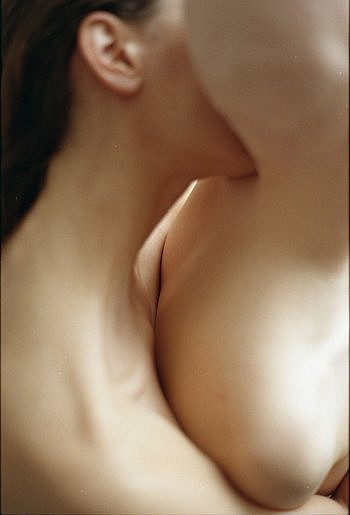
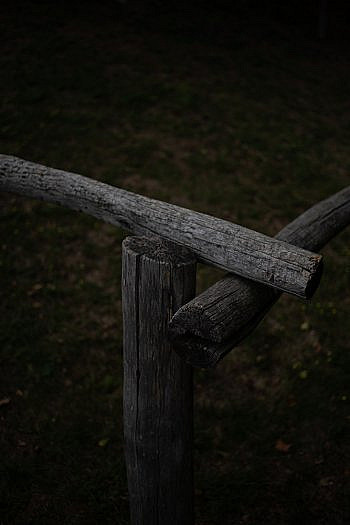
Kasia Fudakowski (b. 1985, living in Berlin) explores the relationship between artist, object and observer in her work. Her sculptures, videos and performances shift between the projection area and action and associatively tell of societal expectations and subjective desires. The resulting inconsistencies or reversals are elements of the comic. Whether it is a response to a laugh, whether the artist and viewer are in a state of alienation or surrender to the ridiculousness; these are the questions that Fudakowski explicitly examines in her performances and the accompanying videos.
The ceramic, rattan, metal, salt dough and clay sculptures play with the human need to recognize itself in everything, and emulate anthropomorphic figures. Fudakowski, for her part, practices craft camouflage, in that she used a material as though it were something else. These strategies produce set pieces of associative and differential constellations, not least questioning the possibilities and necessities of the social “preservation” of a subject.



-
The Hopper Prize Grants for Artists – Fall 2026Deadline November 17, 2026The Hopper Prize is now accepting submissions for its Fall 2026 artist grants, offering support to visual artists and photographers working across all media worldwide.
-
Argo: Movements of Inner and Outer NatureGwendolyn Hope GussmanArgo is a creative residency program and project space in Athens, Greece. We are open to visual artists, writers, performers, musicians, scholars, and any other creative discipline. Each residency includes accommodation, studio space, research support, and participation in a creative community.
-
Eija-Liisa Ahtila: A Possible ImageOct 3, 2026 – Jan 31, 2027In the exhibition A Possible Image – of what is just becoming reality, Eija-Liisa Ahtila explores the interplay between humans and other forms of life within the ecological realm, and how we might understand change.
-
Sean Scully, 48Apr 18, 2026 – Dec 24, 2028LongHouse welcomes the world-renowned Irish American artist Sean Scully into the garden with his colored stack entitled 48, 2024, a work that epitomizes his deliberate use of stripes and color, with gestures toward land, sea, and sky.
-
Ibrahim Mahama: The Time of HarvestsOct 22, 2026 – Feb 28, 2027The Cartier Foundation for Contemporary Art presents The Time of Harvests (Le Temps des récoltes), an exhibition of unprecedented scale in France by Ghanaian artist Ibrahim Mahama, accompanied by nine associated artists...
-
Relic 4: Larry AchiampongOct 16 – Dec 12, 2026This autumn, Larry Achiampong will present his new film Relic 4 (2026) at KARST, revisiting the cinematic universe of the Relic Traveller project after a six-year hiatus. Exploring themes of fallen empire, class, and displacement...
-
Kishio SugaLong-term viewKishio Suga brings together a representative group of the artist’s sculptures, dating from the 1960s to the ’90s, that probe the slippages between seeing and knowing. Works culled from Dia’s holdings are complemented by key loans...
-
untame flow stay releaseAug 31 – Nov 29, 2026untame flow stay release presents artistic practices undertaken in response to unjust, environmentally toxic and ableist structures – systems that continue to suppress individuals and communities by individualizing violence...
-
Suki Seokyeong Kang: Mountain – Hour – FaceOct 30, 2026 – Jan 24, 2027Featuring nearly 40 works created between 2014 and 2024, “Suki Seokyeong Kang: Mountain—Hour—Face” is the first solo exhibition by a South Korean artist in the McNay Art Museum’s history.
-
Wolf TonesOct 3, 2026 – Apr 4, 2027
Wolf Tones presents the work of six artists as a refracted analogy of an acoustic phenomenon. The wolf tone is an irregular vibration produced by a musical instrument such as the cello. It is the result of an acoustic conflict produced by its wooden body.
-
Ahn Chang-Hong: noon-moolSep 5 – Dec 6, 2026American University Museum is honored to present noon-mool, a major solo exhibition by Korean artist Ahn Chang-Hong. Occupying both the second and third floors of the museum, the exhibition offers a rare opportunity...
-
American Icon: The US Flag in ArtJun 6 – Dec 6, 2026
Across generations, the Stars and Stripes has inspired pride, protest, and profound artistic expression. From battlefields to modern cultural movements, our flag’s journey through art reveals a nation constantly redefining itself.
-
Venice Biennale 202661st International Art ExhibitionThe 61st International Art Exhibition of La Biennale di Venezia – In Minor Keys by Koyo Kouoh (1967–2025) – will run from Saturday 9 May to Sunday 22 November 2026 (preview 6, 7, 8 May) at the Giardini and the Arsenale venues, and in various locations around Venice.
-
The Other Side of the MountainOct 14, 2026 – Mar 21, 2027
The Other side of the Mountain brings together contemporary artists working across the African continent and within the Afro-Nordic diaspora. They explore how cities and modern landscapes shape our connections to one another…
-
Uri Aran: Look How Hard They WorkOct 23, 2026 – Feb 28, 2027Uri Aran arranges objects and images the way one might spatially illustrate a scene with whatever is on a dinner table, letting a salt shaker stand for a person and a napkin for a museum, for example.
-
Neues MuseumNuremberg, GermanyA 21st-century museum as a lively forum for cultural experiences, a place of inspiration, education, communication, and debate. Neues Museum strives to be a venue that brings together people, art, and architecture offering ever new experiences and perceptions.
-
Carsten Höller: TwoJul 14, 2026 – Jan 31, 2027
UCCA Center for Contemporary Art presents “Carsten Höller: Two,” from July 14, 2026, to January 31, 2027. Featuring some of the artist’s most iconic works alongside a selection of new pieces, the exhibition unfolds as a “Laboratory of Doubt”…
Visit our New Announcement Submission page > Announcement Submission page >