Nasos Karabelas
Photographer
Nasos Karabelas is a fine art photographer and film director based in Thessaloniki, Greece. He was born in 1992 in Pyrgos, Greece. He started dealing with photography the last seven years and he has produced five short films and one feature film, OSMOSIS, which took part in festivals, in Greece and abroad. The kind of photography he has been dealing with is experimental black and white photography and in particular “the possibilities of deformation of the human body.” One of the main features of his work is the frequent use of long exposure technique through which he tries to explore, from a new point of view, his various subjects. Using the human figure as his main theme, he aims at creating new forms and giving a new meaning to them. He attempts to understand the functioning of sensations. To explore the space of emotions and the interaction between the forms of the image and the viewer. Each photo is an entity, which includes a certain mental condition. Τhe exploration of the forms inside the photographs gives us the opportunity to discover the various aspects of our psychosynthesis. The imprinted forms indicate an extension of ourselves and express our deeper psychic world. With the idea of movement continually imprinted on photos, the people look like enclosed within a new reality. A fuzzy and deformed reality. A dimension that belongs to the world of dreams and chaos.
•





-
40th Anniversary Archival PresentationMar 19 – Dec 20, 2026The MIT List Visual Arts Center traces its origins to the Hayden Gallery (founded in 1950), which brought artists and the MIT community together through diverse exhibitions and residency projects.
-
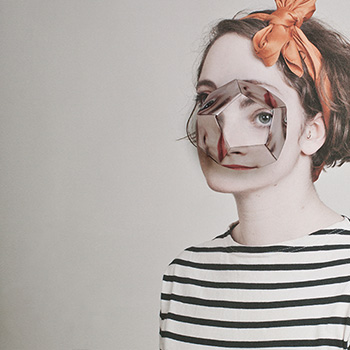
Sacha TurchiArtistSacha Turchi currently lives and works in Italy and collaborates with various visual and sound artists. The interactions between individual and nature, body and psyche, constitutes the essential matrix of her research.
-
Inferno & ParadisoJun 26 – Nov 1, 2026Inferno & Paradiso is an immersive slide-projection exhibition created by Alfredo Jaar, one of the most socially active artists of our day. For this show, Jaar selected 20 contemporary reportage photographers and asked each of them to choose two images from their archives...
-
Visionary LandscapesOct 1 – Dec 16, 2026Swedenborg House is pleased to announce Visionary Landscapes, an exhibition exploring the relationship between landscape, imagination and visionary states. Curated by Museum Director Stephen McNeilly, the exhibition brings together historic works in dialogue...
-
Nadav Kander: The Edge of ThingsSep 18, 2026 – Jan 20, 2027Foam presents The Edge of Things, a major solo exhibition of the internationally renowned artist Nadav Kander. Over more than three decades, Kander has created some of the most celebrated images in contemporary photography...
-
Iris van Herpen: Sculpting the SensesMay 16 – Dec 6, 2026
Van Herpen transcends conventional clothing norms while embracing both traditional couture artisanship and innovative techniques. Ranging from the micro to the macro, the exhibition explores the body’s place in space…
-
Afterlife Film ProgramSep 5 – Dec 18, 2026Death is one of the few universal experiences of the human condition and, at the same time, one of the most mysterious. Throughout history, religions, spiritual traditions, philosophical schools of thought, and even science have sought to answer the same question...
-
OFFSCREEN: 5th editionOctober 20–25, 2026OFFSCREEN Paris is a nomadic event that values contemporary, historic and avant-garde artists with image-based practices. With its distinct voice, it is a must-see highlight of Paris Art Week each October...
-
Todd Hido: #2424-1, 1999 / #3878, 2005from the series Between the TwoPrinted Matter is thrilled to announce the second [#2424-1, 1999] and third [#3878, 2005] in a series of three fundraising Risograph-print editions by the artist Todd Hido. These two images bookend Hido’s most recent Risograph print...
-
The Present as FoundOctober 2–23, 2026The divergent creative practices of this year’s Zvono Award finalists – Ljiljana Arsić, Isidora Branković, Mustafa Mlinarević, and Emina Veladžić – have shaped a media-heterogeneous, methodologically diverse, and conceptually multilayered exhibition.
-
César CuspocaArtistCésar Cuspoca (1987–2022) is a Colombian artist whose artistic practice principally nourishes questions of perception, the duality between appearance and disappearance, and materialism and immaterialism.
-
2027 Brooks International Fellowship ProgrammeDeadline: October 21, 2026
Tate, in collaboration with Delfina Foundation, invites applications for the Brooks International Fellowship Programme 2027. Now in its thirteenth year, the programme will enable practitioners to work with Tate…
-
Ahn Chang-Hong: noon-moolSep 5 – Dec 6, 2026American University Museum is honored to present noon-mool, a major solo exhibition by Korean artist Ahn Chang-Hong. Occupying both the second and third floors of the museum, the exhibition offers a rare opportunity...
-
Jalan & Jibril DurimelPhotographersTwin brothers Jalan & Jibril Durimel draw inspiration through their diversified upbringing between the French Antilles and the US. Born in Paris to parents from the island of Guadeloupe, at the age of 4 they moved to Miami...
-
untame flow stay releaseAug 31 – Nov 29, 2026untame flow stay release presents artistic practices undertaken in response to unjust, environmentally toxic and ableist structures – systems that continue to suppress individuals and communities by individualizing violence...
-
SMITH: Ici Grand OuvertMay 23, 2026 – Jan 31, 2027An artist-researcher, SMITH (born 1985) navigates between photography, moving images, installation, sculpture and performance. His work develops in open cycles, often starting with photographs.
-
In Our Time: R. B. Kitaj and BooksJun 17 – Nov 8, 2026
The exhibition presents Kitaj’s complete portfolio, rarely exhibited in its entirety, of fifty silkscreen prints, created between 1969 and 1970, titled In Our Time: Covers for a Small Library After the Life for the Most Part.
-
Irène ZurkindenAug 27 – Nov 28, 2026Coinciding with Kunsttage Basel, this August we present a solo exhibition dedicated to the work of Swiss artist Irène Zurkinden (1909–1987) at our Basel gallery. Zurkinden defied easy categorisation, developing a distinctive painterly language...
SUBMIT YOUR ANNOUNCEMENTS
Visit our New Announcement Submission page > Announcement Submission page >
Visit our New Announcement Submission page > Announcement Submission page >