Fight Against the Sea Rise / Andrea Stefanelli
According to Arnold Gehlen, one of the fathers of Western anthropology, man comes into the world incomplete and imperfect, incapable of surviving in nature due to his multiple limitations. However, over time and with intelligence he learns to survive thanks to a complex system of acquiring knowledge that allows him to bend the supernatural force of the environment to his will, finally making himself the protagonist of his own destiny.
From the beginning of man’s evolutionary process, from our very distant predecessors to the present, it seems that this spasmodic attempt to control the entropic force of nature has led to more or less unexpected consequences.
Man, having become inescapably dependent on what nature offers him, has not only managed to manipulate her to his advantage, but has poured her over the millennia into a state of extreme suffering that sees her sometimes gaining the upper hand, rebelling against man, and sometimes instead retreating, making herself no longer available, refractory to those who have for too long exploited her resources. Mother Nature is now the protagonist of a dichotomy in perpetual oscillation between uncontrollable extension and reduction of her power.
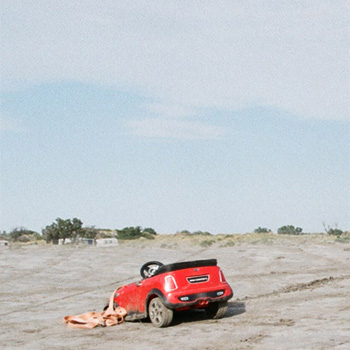
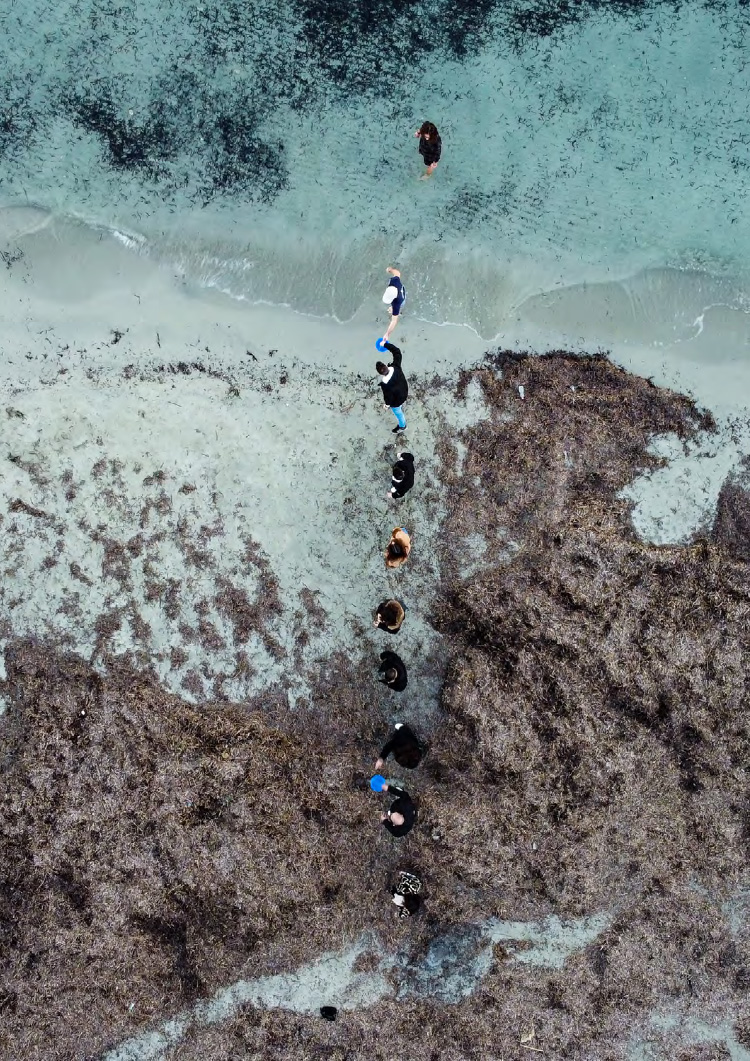
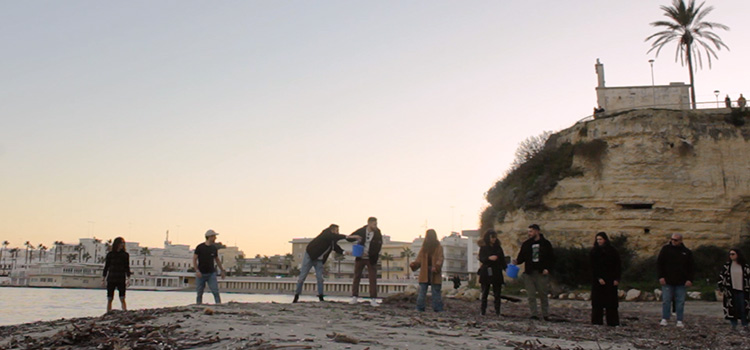
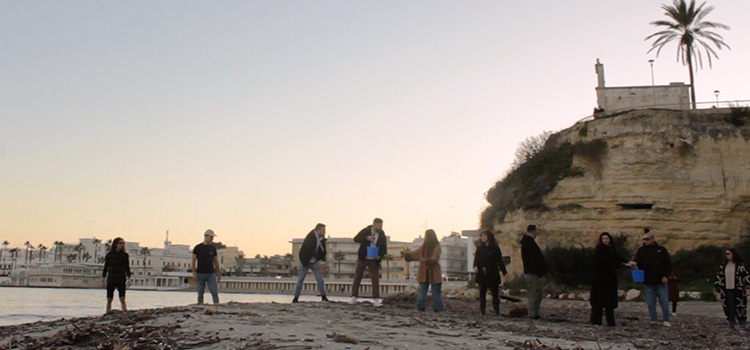
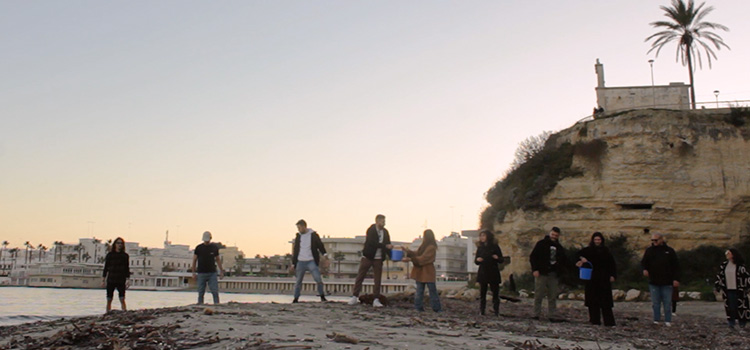
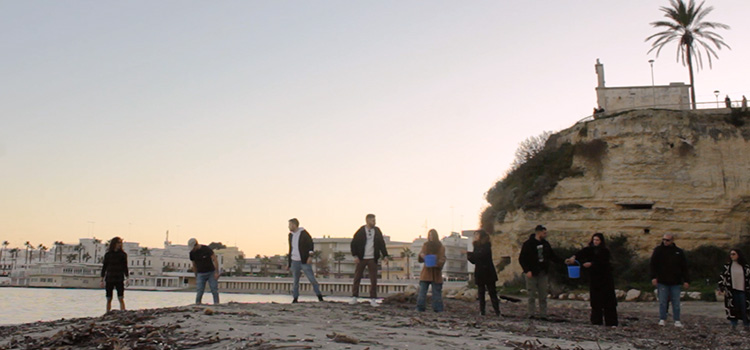
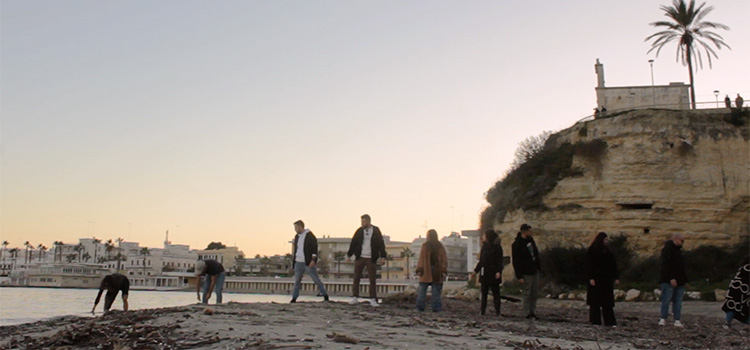
Andrea Stefanelli, born in 1998 of Salento origins, chooses to focus his artistic reflection on the greatest gift of our common Mother: sea water. What Stefanelli proposes in a stubborn itinerant participatory project that saw him move from Budva, Montenegro (December 15, 2023), crossing most of the beaches of his land (Gallipoli, Porto Miggiano, Otranto) is a new eternal fight in the desperate struggle against environmental disaster.
The artist takes us back to that primordial condition expressed by Gehlen, the one that speaks to us of our finiteness and our intrinsic, instinctive will to fight, survive, specialize in a hostile environment, but through the lens with which the new generation of artists seems now more than ever to look at one’s own work: that of the fight to safeguard the environment.
Tracing methods typical of conceptual art, of performance and participatory art, Stefanelli seems to welcome the lesson of Gino De Dominicis (Ancona, April 14, 1947 – Rome, November 29, 1998) in the desire for a desperate repetition of an impossible dream.
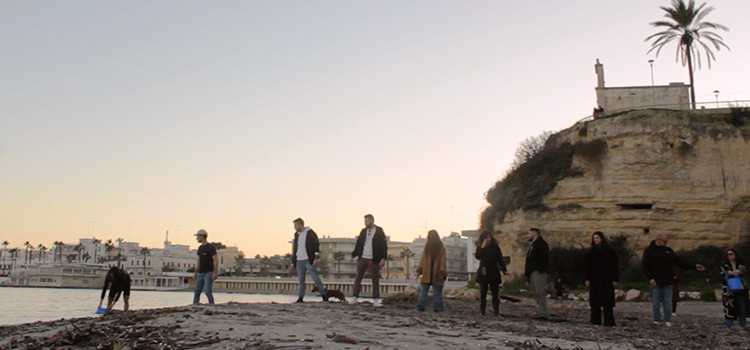
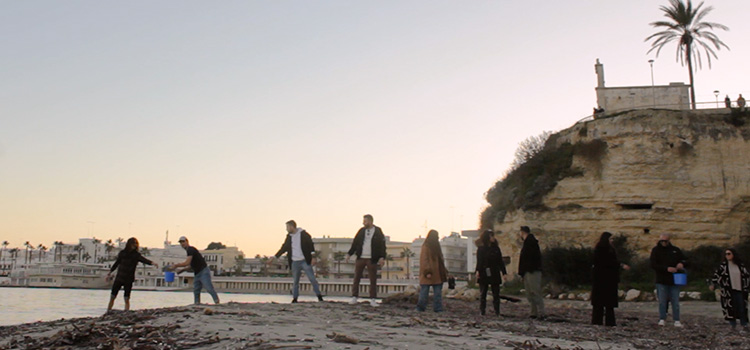
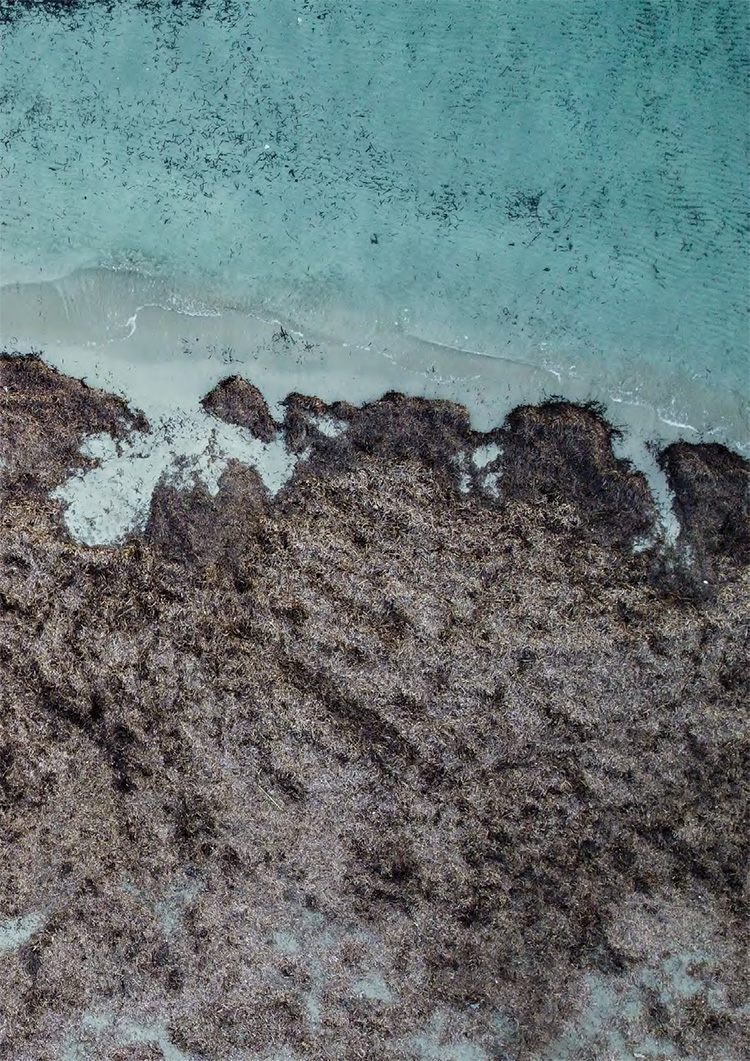
If the latter, in “Tentativo di volo” (Attempt to Fly), a performance video-recorded in 1969, saw repetition as the key to learning to fly, a Leonardesque dream not yet granted to man, Stefanelli sees in the repetition of an apparently senseless act the possibility of fighting one of the inevitable and disastrous effects of anthropization which has seen a significant and very dangerous lowering of sea waters in recent decades. By making himself the initial and solitary protagonist of his performances, the artist manages to involve other casual volunteers by leveraging the curiosity of passers-by.
One of the primordial characteristics of man is therefore: the same curiosity that at the dawn of our species allowed us to form a group, system, help and learn from each other – somehow save ourselves.
Gathering questions and perplexities, he manages to create an assembly line of volunteers, re-proposing to us a metaphorical translation of Darwinian laws, entrusting himself and each of them with the increasingly pressing task of feeling responsible for the consequences that our predecessors, and ourselves, have and continue to have in the process of destroying that Common Mother for whom the artist seems to feel a kind of irreducible devotion.
Fight Against the Sea Rise / Andrea Stefanelli
The rhythm of the repetition of the passage of the bucket full of sea water, its emptying and its cyclical filling are part of that dream that Gino De Dominicis had intuited before him as the potentially functional tool for the actual realization of an impossible intent.
If, as Gehlen argued, repetition is precisely the key that has allowed man to acquire the fundamental elements necessary for his survival, what makes us think that Stefanelli’s art is not the starting point in the construction of a new habit that sees us all involved in repairing the damage we have caused to the person (or thing) who gave us life?
Stefanelli himself sometimes seems to resist the undertaking. “The fear of nonsense and misunderstanding” (quoted by the artist) are part of the initial phase of the project, a project which as all great metaphors contain within themselves the variable of incomprehensibility and misunderstanding.
We can easily think that this sense of fear is the same that has united us in all new beginnings, in all the things that seem nonsensical to us but which are an expression not only of our vocation, but also of something that we realize is greater than us.
Fight Against the Sea Rise / Andrea Stefanelli
Fortunately, between the initial input of the artist and the collaboration of the improvised performers, the great tool of dialogue is inserted, one of those elements that only man has been capable of creating on his own, demonstrating his immense potential. A fundamental element of the performative process is precisely the value of the word that allows in Andrea Stefanelli’s performances to connect people, passers-by, children, parents, teachers, policemen, old friends and strangers, to all join together in an apparently senseless but common action, perhaps capable of changing our place in the world and the effects we have on it, pushing us towards increasingly avant-garde improvement.
A light-hearted project that of the artist, playful, almost sweetly childish who takes on an immense responsibility: that of making us aware of our ability to reverse the fate of the world, to change the system, to remedy the mistakes of our parents with the enthusiasm of a child to whom one cannot say no. Andrea Stefanelli gives us a traveling metaphor, an ongoing commitment, which, hopefully infinite, allows us to take us far away, as all man’s great dreams have done thus far.