The relational system of the human being is never a simple matter because it is always present, active, and mutable. The way in which this is made explicit is never predictable because it is conditioned by the external response and, from time to time, modulated according to the response of the other.
Where by “other” one means the exterior of the epidermal boundary that contains biological and psychological apparatuses, past and present histories, in that place the field of investigation of the artistic research of Anouk Chambaz (Renens, 1993) opens up.
On the occasion of the exhibition hosted by Fondazione Recontemporary ETS, curated by Ghëddo, “Sometimes I Get Goosebumps,” the artist expresses in this interview her vision of a space of subtraction between “the self and the other,” in a dual vision but open to multiple possibilities of evolution. Assuming as objects of analysis the eye and the skin, the vegetal and the artificial, the mimicry of faces and the vision of the landscape, the artistic expression develops in an ensemble device conducted through the cinematic medium.
The boundary as a space of potential contact can be considered as a ground of subtraction where the immanent and the mutable embrace each other in the possibility of an unpredictable input and output, a space that recounts the biographical and the autobiographical expressed in a dreamlike and nebulous language. An atmosphere that makes theoretical research and artistic expression the possibility of an interpretation that shakes and moves, a nostalgic and crepuscular atmosphere in which, involved, we are not only participants, but also potential protagonists.


C.C.: The ensemble of the works exhibited (“Vegetation Walk,” 2016; “Marica,” 2022; “Di Notte,” 2025) allows one to express the complexity of your work. From which field of investigation does your research start? Where has it brought you so far?
A.C.: I trained in a film school. After graduation I participated in an artist residency in Luxembourg, where I met Julija Paskeviciute. Together we realized Vegetation Walk. She introduced me to Donna Haraway, but above all to another way of doing. I saw this young artist who walked, made attempts, started again. I thought: but is this also called work? It marked my way of working with film.
C.C.: The title of the exhibition is very representative, it recalls a very specific image and at the same time is capable of evoking an almost ungraspable, quick and sudden sensation. Why was this title chosen for the exhibition?
A.C.: I remember a text by Gregory Bateson that cites goosebumps as an example of an analog signal. For example, when one says “I love you,” it is more probable that the other pays attention to the paralinguistic aspect that accompanies the sentence than to the words themselves. I am interested in that little of the unconscious, of the involuntary, of the kinetic in communication between individuals. It is a sort of breach in verbal communication. The title “Sometimes I Get Goosebumps” alludes to an “I” that has goosebumps, but who is authorized to have emotions, inside human society and outside of it?


C.C.: In your works a very interesting theme emerges that foresees the consideration of a possible experience of pain. For example in “Vegetation Walk,” the bodies are protected with suits to defend themselves from possible wounds or to avoid entering into contact with a vegetation that could sting, wound or irritate the skin. Or I think of the presence of the drone that would like to be participant in the human experience but that is forced to observe from above because, if it participated, it would have to crash on the ground and therefore “die,” consciously letting itself go to the suicide of its integrity. In “Marica” the attack of the parasitic butterfly that has destroyed Donatella’s beekeeping becomes the occasion of a new life. In the three exhibited works there seems to be evoked a destruction that can be ontological function to creation (“Marica”), already happened (“Di Notte”) or impossible (“Vegetation Walk”): do you consider destruction as a possibility for a final integration, or do you think there is an insurmountable threshold between what is commonly called living and dying, between destruction and rebirth?
A.C.: As a child I spent many hours imagining intense experiences, with wonderful and horrific components, that contained happy and violent moments. I thought a lot about the slipping between one situation and another, sometimes sudden and abrupt, other times slow and slimy. I imagine that in the mind of a child it is a big question how categories as different as “good” and “bad” can be found in the same individual. It creates a great confusion. And inside confusion I think there is pain. Still now I am interested in these zones of friction and the possibility of metamorphosis, of exiting from confusion, of constructing other categories.


C.C.: In “Vegetation Walk” you seem to confer a dimension of great humanity to the drone that films the figures from above, thinking of the possibility of its death if it should participate in human experience. In this way you manage to shift the feeling of commotion toward an artifice, a sense of commotion that is naturally human and directed toward the human. In light of this thought, what is the symbolic role of the drone? In what way is it protagonist of the work, if it is?
A.C.: In “Vegetation Walk” there are two voices, like two acts, two faces of the same coin. The first is that of Julija, sweet and playful. She recounts our attempts to protect our bodies before carrying out a walk in the vegetation. At the end Julija says “I expect to find something special. I look, but I see nothing.” From there begins the drama of the drone that speaks without anyone listening to it. The possibility that it has a voice is not even considered. It was 10 years ago, technology has changed a lot, the debate has shifted with respect to artificial intelligence. This was one of the first drones marketed for civil, professional video use. The word drone was more often associated with a military and destructive use than with a profession of the audiovisual. From there starts the fiction of this character reduced to being a fragile toy, with little battery, that cannot enter into relation with others. It is desperate: “they say that I have nothing to do with nature.” And yet it finds itself having desires, confronting the limitations of its body, like the human characters of the video.


C.C.: In the work “Marica” the medium has been, as you say, extremely functional to the expression of the artistic message, in the sense that it allowed you to look at the human and the natural in a different perspective, very distant from the visual capacity that the human being naturally has and from his capacity to use it. It seems that the biological in this work is treated as a post-human body or beyond the physiological. Can you speak to me about the way in which the cinematic technique was useful to you for “Marica” and what is the relation between the use of the cinematic instrument, such as for example the lens you used, and the message of the work?
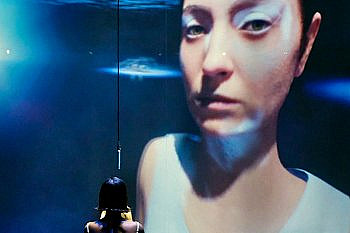
A.C.: In Marica I used a Laowa wide-angle macro 28 mm lens. Practically, this allows me to position the optics of the camera a few millimeters from my subject, almost touching the subject. And so I filmed the faces of the two protagonists of the film: Donatella and the butterfly. Human visual references fall, the proportions and the organization of the world linked to human sight, to the habitual distance between what we observe and us. A human eye starts to resemble a strange agitated animal, a nascent emotion seems to motivate the movement of the limb that cleans the face of a lepidopteran. I like to use cinema to make our categories of thought and the hierarchies linked to this waver.


C.C.: “Di Notte” is a work that arouses a sort of “estrangement” from the real since you choose not to recount a linear and detailed narration, evident in the choice not to frame the hands at the wheel, for example. Do you think that this sense of estrangement is similar to the collapse of the categories of thought that you spoke to me about with regard to the act of falling asleep and of sleeping? Why do you choose two different photographic registers such as portrait and landscape, in what way do they dialogue with each other and why?
A.C.: I think that portrait and landscape are very linked. I quote Deleuze and Guattari: “The cinematic close-up treats first of all the face as a landscape. And your mother, is she a landscape or a face? a face or a factory?” (Godard). There is no face that does not conceal an unknown, unexplored landscape, there is no landscape that does not populate itself with a loved or dreamed face, that does not develop a face to come or already past.”
C.C.: “Di Notte” is a work that is born from the investigation on the integration of an incorporated trauma; the research investigation collects the testimonies of people who have lived the war of the Balkans, the pain of war, of loss, the unpredictability of armed attacks: can you speak to me about the process that has led this research to evolve into your final work “Di Notte”?


A.C.: Di Notte is a video artwork that starts from an investigation on the lullabies present at the border between Italy and Slovenia. I spent two weeks collecting melodies and nocturnal childhood memories. I found myself with a very intimate, dense and sensorial material in my hands. Some people shared with me memories of a childhood marked by war; many spoke of the childhood night as of a territory marked by violence, by separation. I condensed these testimonies into the text of a new lullaby, that has to do with these fears, these estranging and terrible sensations, and with the landscape of the place: forest, river, mountain.
C.C.: The ensemble of your works investigates a limit space between the artificial and the biological that you identify not properly as a threshold but as a “space of friction”: can you deepen the meaning of friction in this sense? What do you think about the experience that the human lives in this “space of friction” and what can be the states of mind and the sensations that are born from inhabiting this space?
A.C.: Rather, I am interested in a liminal space between the individual and alterity. In these three films alterity makes itself present through technology, the animal, or the unconscious. I am interested in these spaces of friction from a dramaturgical point of view. They are spaces of conflict, of contact, of boundary. Spaces of relation where tenderness or violence can be born.


C.C.: You expressed to me that you are particularly interested in faces, as if it were a sort of “obsession” (Anouk’s quote), and that this interest guided the choice of the use of the extreme close-up: can you explain how this great interest is born and why it exists and why you define “Di Notte” as the work that resembles you the most?
A.C.: In Di Notte I had the pleasure of working with Gabrielle Pialoux, who interprets the figure of the driver. I was looking for an ambiguous figure, between masculine and feminine, between childhood and adulthood. Her face, besides being magnetic, is ambiguous. Every directorial decision in “Di Notte” was taken because it brings back to being in balance, on the threshold, between two states. Also the exteriors of the film are shot at twilight, between day and night. I feel this space close to me… “It is beautiful to make something that resembles us.”
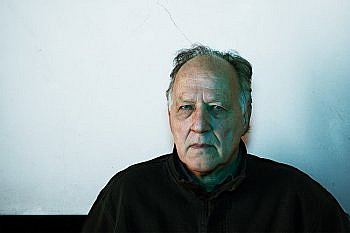
Anouk Chambaz
Anouk Chambaz (Renens, 1993) works with moving images, exploring the thresholds between spaces, dreams and individuals. She graduated in cinema at ECAL in Lausanne and in philosophy at La Sapienza in Rome. In 2022 she received the Combat Prize (video section); in 2023 and 2024 she obtained special mentions respectively at the Francesco Fabbri Prize and at the Rio de Janeiro International Film Festival. In 2025 she is finalist at The Talent Prize. Her works have been exhibited in numerous institutions, among which MACRO – Museum of Contemporary Art of Rome, GNAMC – National Gallery of Modern and Contemporary Art (Rome), Rencontres Internationales Paris Berlin (Paris), Filmmaker Festival (Milan), Halle Nord (Geneva), MUSE – Museum of Sciences (Trento), MACTE – Museum of Contemporary Art of Termoli (Termoli), Museo Novecento (Florence), Fondazione Sandretto Re Rebaudengo (Turin), Vilnius Film Festival (Lithuania) and Newark Museum (United States).
The exhibition took place at the spaces of Fondazione Recontemporary ETS in Turin from April 9 – May 2, 2026 as part of the project curated by Gheddo, TO.BE IV Intracore.
If We Could Inhabit the Skin: a Dramaturgy for Living the Boundary
“Sometimes I Get Goosebumps” by Anouk Chambaz
Interview by Chiara Causo