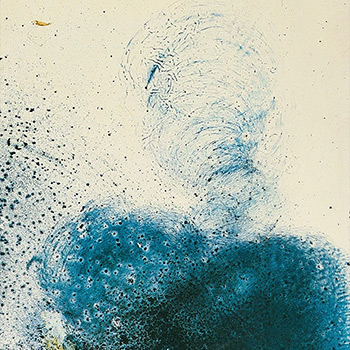
Neo Norte 4.0 di Tere Chad
There was a quiet urgency in my pace as I approached the artist’s home, unsure of what to expect. Upon arrival, I was welcomed by colour, creativity, and the inviting aromas of fresh coffee, baked bread, Chilean honey, and runny egg yolks. The flat, tucked away from Camden’s chaos, was a carefully curated space of design and culture—books from every continent lined muralled walls, and artworks were carefully placed throughout the home.
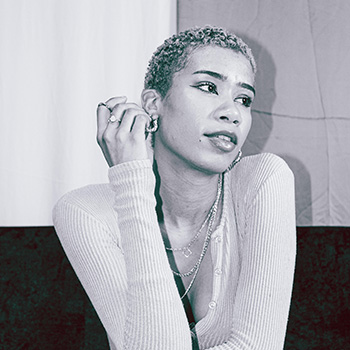
I was greeted not as an outsider but as a friend by four strangers: Tere Chad, Ana Luiza Rodrigues, José Miranda, and Camilo Soler—the curator, the photographer, the artist, and the anthropologist. Though from different corners of South America, they were united by Neo Norte (The New North), Tere’s ongoing research-based project exploring Latin American identity, culture, and creative exchange.
Now preparing for its fifth iteration in October, Neo Norte has evolved since its 2017 inception through exhibitions, performances, workshops, and conferences, structured around four main concepts:
Migration as Creative Destruction
“What does it mean to be Latin American?” Tere asks “You only have to look around one table to see how diverse we are. I like the idea of how innovation can emerge from creative destruction,” drawing parallels with the Manifesto Antropófago (Cannibalism Manifesto), a seminal text that embraces cultural fusion and challenges established hierarchies.
Cultural Syncretism as a Question
“How do these diverse cultures integrate? And how do they create something entirely new and unique?” reflecting the ever-evolving nature of Latin American identity—shaped by centuries of colonisation, migration, and cultural blending.
Shamanism
This concept is examined from both pre-colonial and Western perspectives, acknowledging how indigenous cultures have been transformed, merged, or absorbed over time. As José explains, “There’s no such thing as a pure culture anymore—everything now exists as a blend of past influences and present realities.”
The Natural Versus the Digital
Here, Neo Norte explores the intersection between tradition and technology. From Ecuadorian textiles inspired by ancient Andean sculptures to cutting-edge digital art, Neo Norte brings these dialogues to the forefront. “It’s about questioning how new technologies will influence cultural expression in the future,”
The Emergence of Neo Norte
In 2017, while studying at UAL Central Saint Martins, Tere Chad noticed a stark absence of Latin American representation in the university’s academic resources.
“They claim to have one of the largest arts and humanities archives,” she recalls, “yet the basics of Latin American history are missing. Every class has a Latin American student, yet our region is invisible.”
Determined to change this, Tere founded the Latin American Society with the goal of building a community and expanding institutional knowledge. Working with artists such as Ana Luiza Rodrigues, and their first step was curating a library collection, beginning with a donation of 100 books from The Latin American House, alongside poetry readings and artistic interventions.
Inspired by these resources, the group developed a Latin American manifesto through collages of text and imagery. “During a performance, we cut out a map of Latin America and flipped it—creating the New North,” Tere explains. The manifesto was read aloud in Spanish and Portuguese, with English translations, its principles were deliberately unordered to reflect the equal value of all cultural expressions.
The events caught the attention of Paul Haywood, Dean of UAL, who became a key supporter of Neo Norte and helped Tere secure a Talent Visa to continue her work in the UK. From this foundation, Neo Norte evolved into a research-driven art project, drawing inspiration from Joaquín Torres García, who challenged eurocentric perspectives through his idea of the School of the South(La Escuela del Sur), and Oswald de Andrade, whose theory of cultural “cannibalism” embraced the transformation of external influences into something uniquely Latin American.
For Tere and Ana, this cultural fusion is evident across Latin America. “Walk down any street, and you’ll see it,” Ana reflects. “An Italian villa next to a wooden house with Indigenous motifs, followed by something inspired by African or Japanese design. There’s no uniform architecture; every street reflects diverse influences.”

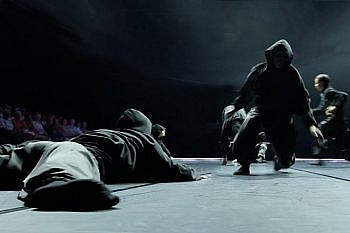
Samka Meets Neo Norte: Circular Messages Performance

Samka Meets Neo Norte: Circular Messages Performance

Samka Meets Neo Norte: Circular Messages Performance
Reclaiming Latin Identity
In this sense, Neo Norte aims to reshape not only how the West perceives the Global South but also how Latin Americans see themselves. It challenges the habit of looking to Europe and the US as the sole sources of progress, instead fostering confidence in Latin America’s own creative and intellectual potential.
“In Latin America, we’re taught from a young age that if we want something better, we have to look elsewhere,” Tere explains. “At school, any attempt to innovate was met with the same response: We’re at the end of the world. If you want better, go to the UK, Germany, or the US. Don’t expect it here.”
She argues this mindset holds Latin America back as much as economic or political factors. “If we grow up believing we can’t do better, how much of that belief limits us?”
The project has sparked both admiration and resistance. Tere recalls a conversation with São Paulo professor Wilton Garcia about the intense reactions it provokes. “I told him this project brings out the best in people, but sometimes the worst. I didn’t understand why.” Wilton, drawing from shamanic traditions, explained: “You’re working with energy, turning the world upside down. When that happens, people can’t hide what’s buried below the surface”
This idea resonated further when Tere read an article about London’s projected demographic shift which predicts that by 2040 the city will no longer be predominantly white. “Some fear that the future belongs to the Global South instead of embracing it” she reflects. Resistance was also evident when she gave a talk at the London Stock Exchange, where she first met Camilo. “The next day, I was told people were calling my project radical—this idea of flipping the world.” She laughs. “A simple act like flipping a map unsettles people. But the truth is, the future does belong to the Global South. Neo Norte isn’t just research—it’s transformation.”
Tere believes Global South cultures, particularly in Latin America and Africa, are often dismissed as ‘less rational’ because they prioritise intuition and spiritual connection. “Take the Andes,” she says. “Some cultures still deeply connect with nature and the elements.” Through Neo Norte’s collaboration with Samka, she learned about traditional Andean instruments used in different seasons to encourage crops to grow and bring rain. “People are far more connected—to the weather, the land, everything. Yet these ways of knowing are often dismissed simply because they don’t fit Western rationality.”
By challenging dominant narratives, Neo Norte is not just reshaping perceptions of Latin America—it’s redefining knowledge, creativity, and progress.


Neo Norte in Practice: A Living Experiment
Neo Norte is more than an artistic project; it is a practice-based research initiative adapting to each location and incorporating local artists.
“In Helsinki, I collaborated with Finnish artists because it made no sense otherwise—Neo Norte is about dialogue. It’s also a celebration of the cultures of the South.”
The project has taken shape in various cities:
Neo Norte 1.0 (Chile, 2018) – Group exhibition at Fundación Cultural de Providencia, Santiago; Neo Norte 2.0 (London, 2019) – Group exhibition at Exposed Arts Projects; Neo Norte 3.0 (Helsinki, 2021) – Group exhibition at Myymälä2 Gallery; Neo Norte 4.0 (Sicily, 2023–24) – Performance at Villa Giulia, Palermo, and Land art Installation at the Archaeological Park of Segesta, Sicily; Neo Norte 5.0 (Venice & São Paulo, 2024–25) – Performance at Spazio Zelda and the upcoming show at Memorial da América Latina
Neo Norte has also collaborated with Samka, a Bolivian duo rethinking ancestral knowledge for contemporary life. Their joint work at the 2024 Bloomsbury Festival led to a discussion on ritual and performance, where I was first introduced to Neo Norte.
Ritual and the Role of Art in Society
During our breakfast dialogue, the conversation turned to ritual—its place in Indigenous cultures and its relevance in contemporary art.
Camilo, who had spent time in the Amazon documenting traditions and facilitating the communication of their worldviews, shared how everyday rituals play a crucial role in shaping cultural identity.
“In the Amazon, myths often begin with someone forgetting to have a hot drink before leaving home. To outsiders, it might seem trivial, but these rituals hold deep meaning. Even in the UK, morning tea or coffee serves a similar purpose—it’s just not recognised as a ritual.”
Recognising a clear link between these traditions and art history, Tere noted how art has lost its communal purpose in favour of the market.
“Art in the Renaissance was commissioned by the church, or it was about religion. Now, the art market dominates, and art has lost its community purpose in many ways. That’s why I think performance and ritual in art are so important—they help bring people back together.”
One powerful example was Neo Norte 4.0’s Chakana walk in Sicily, where artists moved in the shape of a Chakana—an ancient Andean symbol representing the Southern Cross, a bridge between earth and sky.
“The Chakana symbolises connection,” José explained. “Our ancestors mapped it using four stars, and it appears across different cultures—from the Incas to Africa.”
Tere recalled discovering the Chakana’s meaning within other cultures through artists from Peru and Sicily realising its ability to shift perspectives, much like Neo Norte itself.
“In Sicily, artists considered themselves part of the South. But when I pointed out they couldn’t see the Southern Cross—the symbol of the Chakana—it challenged their perception of ‘South’ entirely.”


Indigenous Science and the Limits of Western Knowledge
The Chakana not only represents a bridge between earth and sky but also challenges Western perspectives on time, history, and knowledge. The Incas believed that past, present, and future exist simultaneously—an idea that, centuries later, aligns with modern quantum physics, which suggests time is not linear but interconnected. This perspective contrasts sharply with Western notions of progress, where history is often seen as a straight path leading toward development and modernity.
José and Camilo explained that many Indigenous cultures in the Americas have long practised their own forms of science—rooted in careful observation, deep environmental awareness, and systematic documentation.
“The Maya, for example, relied heavily on observation and were extremely sceptical of anything that could not be empirically verified,” Camilo explained. “The Incas were also skilled observers of nature, and today, the Kogi people of northern Colombia continue to practice a form of science that is both rigorous and systematic. They carefully document environmental patterns, such as bird migrations and seasonal changes, using methods that are deeply integrated with nature.”
However, because these methods do not rely on Western scientific instruments, they are often overlooked or dismissed as folklore.
“The Kogi, for instance, reject the term ‘magic’ because they believe it diminishes the legitimacy of their scientific methods,” Camilo added. “Their knowledge is built on precise observation and systematic study, even if it does not conform to Western scientific frameworks.”
This conversation led to a reflection on how the dominance of Western scientific thought has shaped education, funding models, and even the way success is measured in the arts.

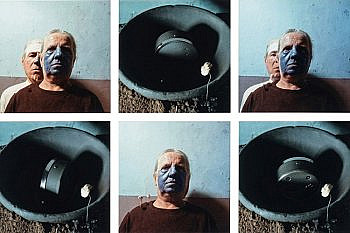
Neo Norte 1.0 / Javier Neira

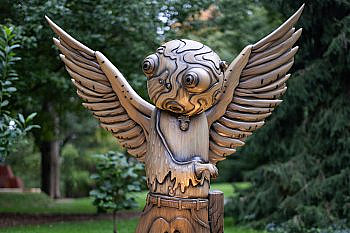
Neo Norte 1.0 / Nicolás Canal

Neo Norte 1.0 / Matteo Valerio
The Challenge of Measuring Art and Experience
In modern society, success is often determined by data, numbers, and measurable outcomes. This presents a challenge for creative projects like Neo Norte, which deal with ideas that cannot always be quantified. Funding bodies and governments require reports filled with statistics—how many people attended an event, how many artists participated, and how many digital interactions were recorded. But what these reports fail to capture is the emotional, cultural, and intellectual impact of the work itself.
Tere spoke about the difficulty of justifying the value of art in a system that prioritises numerical data over qualitative experience.
“Grants require reports saying how many people participated, how many engaged online, how many were involved digitally,” she explained. “But how do you measure creativity? How do you quantify happiness? The government needs statistics to justify funding, but what if the real impact is something unmeasurable?”
This fixation on quantification is a reflection of a broader shift in Western thought. Before the Enlightenment, art, philosophy, and science were deeply intertwined, and artistic inquiry played a central role in shaping intellectual discourse. But as rationalism and industrialisation took hold, science became the dominant force, and art was gradually pushed to the margins.
“How can the arts give a response to all of the things that don’t fit into the science world?”
Neo Norte challenges this divide. By weaving together art, ritual, Indigenous knowledge, scientific inquiry, and technology, it offers an alternative way of understanding the world—one that embraces intuition, emotion, and community alongside research and theory. It is a project that resists the limitations of Western structures, seeking instead to reimagine our relationship with knowledge, creativity, and the Global South.
There was a sense that Art had lost its purpose and that there was a growing disconnect in the way artists connect and engage with communities. At the same time societies have become more polarised, but Tere sets out a vision for art as a means of reconnecting
“Art used to connect with society in deeper ways… art can bridge divides because it’s a universal language.”
However, this is not without its challenges, particularly with AI and social media reshaping interactions. Tere believes art must adapt to meet these challenges.
“People are becoming more isolated. Art is a space to reconnect and push boundaries.”

‘Elyma,’ land art installation from Gandolfo Gabriele David inscribing the Chakana (Andean representation of the Southern Cross), Segesta Archaeological Park, Sicily, Italy (2023).
The Future of Neo Norte
Neo Norte is constantly evolving. While early discussions about a sixth edition in Bolivia are underway, the focus remains on completing the fifth in São Paulo. Tere envisions it becoming a formal organisation or trust, supporting artists from the Global South and fostering cross-cultural exchanges. “I want to create spaces for conversation, dialogue, and engagement around the North-South dilemma,” she explains.
For her, Neo Norte challenges limitations, fosters dialogue, and redefines artistic exchange. “Art allows us to communicate without words, to connect across divides.”
Ana describes it as “an open, live experiment,” integrating communities through collaboration. Camilo highlights its role in fostering engagement. “It provides opportunities for communities to engage, learn, and grow.” José sees it as a bridge between past and present, particularly in understanding indigenous perspectives. “We explore ideas of living in peace, working together, and love.”
I found it hard to break away from this conversation, where I had experienced a warmth and openness from each practitioner, something which is often lacking within modern dialogue. Our current political world is becoming increasingly polarised, volatile and disconnected, I believe we can all learn something extremely valuable from Neo Norte. In recognising reunion, shared perspectives and positive collective thinking about our future. I am extremely grateful for the knowledge and ideologies the group shared with me and I encourage everyone, no matter class, race or gender to take more notice of projects like Neo Norte, to lead as they do with an open heart and mind and to converse with one another positively and beneficially. Thank you again Tere Chad, Ana Luiza Rodrigues, José Miranda, and Camilo Soler.
–Chantelle Weir
Current & Forthcoming Events
Extension Course Presentation, Biblioteca Latino-Americana / Memorial da América Latina
May 11, 2025
Residency, Espaço Expositivo Multiuso Americana / Memorial da América Latina
November 6 – December 1, 2025
Symposium, Biblioteca Latino-Americana / Memorial da América Latina
November 28, 2025
Performance, Museu da Imigração
November 2025
Praça de Sombra
December 3, 2025
Auditório Simón Bolívar / Memorial da América Latina
December 4, 2025
Exhibition, Galeria Marta Traba / Memorial da América Latina
December 4, 2025 – January 18, 2026
Documentary & Publication
December 2025
Visit the website >