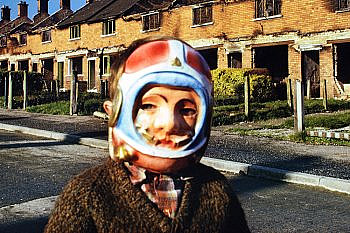
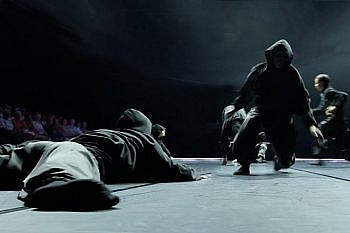
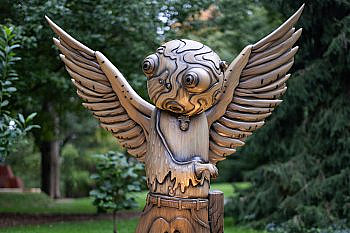
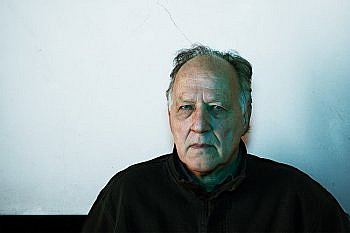
Untitled, Memphis, from the series Los Alamos, c. 1965-68, from the Wilson Centre for Photography / © Eggleston Artistic Trust, courtesy of the Eggleston Artistic Trust and David Zwirner
Celebrating 50 years since William Eggleston’s Guide (1976) this major exhibition showcases iconic and rarely seen dye transfer prints by an American pioneer of color photography, offering a fresh perspective on one of the most influential photographers of the twentieth century.
A pioneer of color photography, Eggleston (b.1939, Memphis, USA) is renowned for combining everyday observation with an intuitive sense of color and composition. William Eggleston: All That Goes Unnoticed brings together many of his iconic works, alongside lesser-known images. Declaring himself as ‘at war with the obvious’, Eggleston’s democratic way of seeing redefined color photography and transformed how the ordinary could be represented.

William Eggleston, Untitled, Memphis, 1970, from the Wilson Centre for Photography © Eggleston Artistic Trust, courtesy of the Eggleston Artistic Trust and David Zwirner

William Eggleston, Untitled, Memphis, from the series Los Alamos, 1965, from the Wilson Centre for Photography © Eggleston Artistic Trust, courtesy of the Eggleston Artistic Trust and David Zwirner

William Eggleston, Untitled, Memphis, from the series Los Alamos, c. 1971-74, from the Wilson Centre for Photography © Eggleston Artistic Trust, courtesy of the Eggleston Artistic Trust and David Zwirner
Alongside his celebrated color photographs and rarely seen vintage dye-transfer prints, the exhibition includes his lesser-known black-and-white and Brownie images from the early 1960s and 1970s. These early black-and-white images show the emergence of his legendary way of seeing and attentiveness to ordinary life, before color became central to his photography.
The roadside diners, suburban streets and domestic spaces of Eggleston’s photographs reveal a sense of isolation characteristic of his subjects. These classic photographs expose the underlying cracks of the American Dream – alienation, loneliness, desire – simultaneously seductive and lurid, tense and revealing. His photographs offer a slower, more attentive way of looking – a way of making the ordinary extraordinary.
William Eggleston: All That Goes Unnoticed is organised by The Photographers’ Gallery, in partnership with the Wilson Centre for Photography

William Eggleston, Untitled, En route to New Orleans, from the series Los Alamos, c. 1971-74, from the Wilson Centre for Photography © Eggleston Artistic Trust, courtesy of the Eggleston Artistic Trust and David Zwirner

William Eggleston, Untitled, Memphis, from the series Los Alamos, c. 1965-68, from the Wilson Centre for Photography © Eggleston Artistic Trust, courtesy of the Eggleston Artistic Trust and David Zwirner

William Eggleston, Untitled, Memphis, 1971, from the Wilson Centre for Photography © Eggleston Artistic Trust, courtesy of the Eggleston Artistic Trust and David Zwirner
5 Things to know about William Eggleston before you see All That Goes Unnoticed
William Eggleston changed the way people looked at everyday life. Fifty years after William Eggleston’s Guide first appeared, here are five things to know before stepping into the exhibition, All That Goes Unnoticed.
1. He helped make color photography art
In the early 1970s, color photography was still widely treated as something commercial, popular or merely decorative. Eggleston challenged that idea.
In 1976, the Museum of Modern Art in New York presented Eggleston’s work in what it described as the first one-person exhibition of color photographs in the museum’s history, alongside the publication of William Eggleston’s Guide. The reaction was famously divided but the exhibition helped establish color as a serious artistic language.
The important thing, though, wasn’t just that Eggleston photographed in color. He used color as part of the structure, mood and meaning of the picture. A red ceiling, a green room or a blue sky could be as important to the photograph as the person or object being photographed. Color wasn’t decoration. It became a way of seeing.

Untitled, Memphis, from the series Los Alamos, c. 1965-68, from the Wilson Centre for Photography © Eggleston Artistic Trust, courtesy of the Eggleston Artistic Trust and David Zwirner
2. His subject was often… nothing special
A supermarket, a diner, a suburban street, a car, a room, a sign or a stranger waiting in the street.
Eggleston’s photographs typically capture the things we might normally overlook. His approach has been described as a “democratic way of looking around” – a way of refusing to decide in advance which things deserve our attention.
That doesn’t mean his photographs are accidental. His Guide contained 48 photographs selected from a much larger body of work, including hundreds of images made between 1969 and 1971. What looks casual is actually highly considered. His ultimate subject may be the act of noticing itself.

Untitled, Santa Monica, from the series Los Alamos, 1971-74, from the Wilson Centre for Photography / © Eggleston Artistic Trust, courtesy of the Eggleston Artistic Trust and David Zwirner
3. The dye-transfer process is part of the story
One reason Eggleston’s photographs can look so intense, saturated and physically present is the dye-transfer printing process he used for many of his best-known works. This process is no longer used in current printing which makes it that much more distinctive.
So, what exactly is a dye-transfer print?
Instead of creating a color photograph in one step, the image is separated into its constituent colors. Separate color information is used to create printing matrices, and cyan, magenta and yellow dyes are transferred onto photographic paper, one color at a time. The process was laborious, but it gave considerable control over color, saturation and tonal relationships.
For Eggleston, this was particularly important because he was working with color transparencies such as Kodachrome. Dye-transfer allowed the intensity of those original transparencies to be translated into substantial photographic prints, while giving the printer considerable control over the final color.
Look closely at an Eggleston print and the color is not simply in the photograph – it is part of the physical history of how the photograph came into being. In other words, the color isn’t just what Eggleston photographed. It is also how the photograph was printed.

William Eggleston, Untitled, Greenwood, Mississippi, 1973, from the Wilson Centre for Photography © Eggleston Artistic Trust, courtesy of the Eggleston Artistic Trust and David Zwirner

Untitled, (Blue Ceiling), from the series Chromes, c. 1970-1973 / © Eggleston Artistic Trust, courtesy of the Eggleston Artistic Trust, Tate and David Zwirner
4. Documenting cultural shifts in the USA
Eggleston’s photographs are rooted in Memphis and the wider American South, although they are a step apart from straightforward documentary photographs.
He photographed during a period of enormous social and cultural change in the United States. The everyday environments in his pictures, roadside spaces, homes, businesses, streets and commercial landscapes, carry traces of post-war American life, including its aspirations, contradictions and histories.
The exhibition looks particularly at the relationship between Eggleston’s color and the visual culture around him: advertising, television, supermarkets, roadside signage and commercial printing. It also considers what can be felt in his photographs through presence and absence, including the legacy of racial segregation in the South.
He wasn’t always photographing the big events of American history. He was photographing the world in which those events were being lived.

Untitled (Pink Bathroom), from the series Chromes, c. 1970-73 / © Eggleston Artistic Trust, courtesy of the Eggleston Artistic Trust, Tate and David Zwirner
5. Fifty years later, his way of looking still feels remarkably contemporary
Eggleston’s influence stretches far beyond photography. His use of color, fragments of everyday life and suggestive, open-ended narratives can be felt across cinema, fashion, publishing and visual culture. This may be one reason his work still feels so immediate.
We now live surrounded by photographs – scrolling, snapping, posting and constantly moving on to the next image. Eggleston offers the opposite experience.
–His pictures ask us to stop.
–To look at the corner of a room.
–To notice the color of a wall.
–To wonder about a stranger.
–To spend time with something we might otherwise dismiss as ordinary.
Fifty years after Guide, perhaps the most radical thing about Eggleston is still his invitation to notice what goes unnoticed.
William Eggleston: All That Goes Unnoticed
October 14, 2026 – February 21, 2027 / The Photographers’ Gallery
Visit the website >