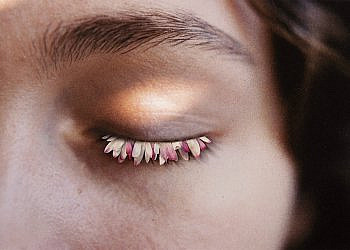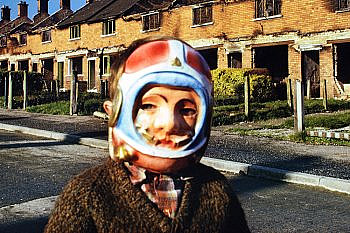
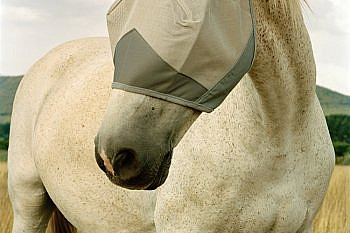



Gary Briechle’s practice is disciplined, almost monastic. Every day roving around Rockland, Maine in an SUV loaded with chemicals, looking at the same mundane scenes and subjects, but expecting different results.


RELATED ARTICLES

Rachel Whiteread
artist / sculptor
Rachel Whiteread’s approach to sculpture is predicated on the translation of negative space into solid form. Casting from everyday objects, or from spaces around or within furniture and architecture, she uses materials such as rubber, dental plaster and resin to record every nuance. In recent large-scale works, the empty interiors of wooden garden sheds were rendered in concrete and steel, recalling the earlier architectural works Ghost (1990), House (1993), and the imposing concrete sculpture Boathouse (2010), installed on the water’s edge in the remote Nordic landscape of Røykenviken.
Rachel Whiteread was born in 1963 in London, England. She studied painting at Brighton Polytechnic, England, from 1982 to 1985, and studied sculpture at Slade School of Fine Art, England, from 1985 to 1987. Whiteread’s work has been included in several solo and group exhibitions, including the British Pavilion at the 47th Venice Biennale (1997); “Judenplatz: Place of Remembrance,” Judenplatz, Vienna (2000); “Transient Spaces,” Deutsche Guggenheim, Berlin (2001, traveled to the Solomon R. Guggenheim Museum, New York, through 2002); Serpentine Gallery, London (2001, traveled to Scottish National Gallery of Modern Art, Edinburgh); Haunch of Venison, London (2002); “Untitled (Room 101),” Victoria and Albert Museum, London (2003); “Rachel Whiteread in Brazil,” Museu de Arte Moderna, Rio de Janeiro (2004, traveled to Museu de Arte Moderna, São Paulo); “Walls, Doors, Floors and Stairs,” Kunsthaus Bregenz, Austria (2005); “Plastiken und Zeichnungen (Sculptures and Drawings),” Staatliches Museum Schwerin, Germany (2005); “Embankment,” Turbine Hall, Tate Modern, London (2005); Museo d‘Arte Contemporanea Donnaregina, Naples (2007); Centro Arte Contemporáneo, Spain (2007); Museum of Fine Arts, Boston (2008); Portland Art Museum, Oregon (2009); and “Drawings,” Hammer Museum, Los Angeles (2010, traveled to Nasher Sculpture Centre, Dallas; and Tate Britain, London). Whiteread was awarded the International Medal of Arts, U.S. Department of State, and Ada Louise Huxtable Prize in 2017.
Whiteread currently lives and works in London, England.
[Gagosian]
•
RELATED ARTICLES
-
Arnold J. Kemp: Not One ThingJul 28 – Dec 6, 2026
Arnold J. Kemp: Not One Thing is the first institutional survey of work by the Chicago-based artist Arnold J. Kemp (b. 1968, Boston). The exhibition focuses on Kemp’s performative and material tendencies of masking, traced through various media.
-
William Eggleston: All That Goes UnnoticedOct 14, 2026 – Feb 21, 2027Celebrating 50 years since William Eggleston’s Guide (1976) this major exhibition showcases iconic and rarely seen dye transfer prints by an American pioneer of color photography, offering a fresh perspective...
-
Ibrahim Mahama: The Time of HarvestsOct 22, 2026 – Feb 28, 2027The Cartier Foundation for Contemporary Art presents The Time of Harvests (Le Temps des récoltes), an exhibition of unprecedented scale in France by Ghanaian artist Ibrahim Mahama, accompanied by nine associated artists...
-
Suki Seokyeong Kang: Mountain – Hour – FaceOct 30, 2026 – Jan 24, 2027Featuring nearly 40 works created between 2014 and 2024, “Suki Seokyeong Kang: Mountain—Hour—Face” is the first solo exhibition by a South Korean artist in the McNay Art Museum’s history.
-
Saatchi GalleryLondonThe Saatchi Gallery aims to provide an innovative forum for contemporary art, presenting work by largely unseen young artists or by international artists whose work has been rarely or never exhibited in the UK.
-
Jasper JohnsArtistJasper Johns was an artist that came onto the scene in the 1950s. Much of the work that he created led the American public away from the expressionism form, and towards an art movement or form known as the concrete.
-
Chiara Camoni, The Flowers of EvilOct 9, 2026 – Jan 26, 2027
For its second exhibition since the opening of its Roman space, La Società delle Api presents I fiori del male, a project dedicated to the work of Chiara Camoni and curated by Alice Motard…
-
The Other Side of the MountainOct 14, 2026 – Mar 21, 2027
The Other side of the Mountain brings together contemporary artists working across the African continent and within the Afro-Nordic diaspora. They explore how cities and modern landscapes shape our connections to one another…
-
César CuspocaArtistCésar Cuspoca (1987–2022) is a Colombian artist whose artistic practice principally nourishes questions of perception, the duality between appearance and disappearance, and materialism and immaterialism.
-
Visionary LandscapesOct 1 – Dec 16, 2026Swedenborg House is pleased to announce Visionary Landscapes, an exhibition exploring the relationship between landscape, imagination and visionary states. Curated by Museum Director Stephen McNeilly, the exhibition brings together historic works in dialogue...
-
David Novros: PaintingOct 9, 2026 – Feb 21, 2027The Hamburger Kunsthalle is devoting a large-scale retrospective to the painter David Novros (b. 1941 in Los Angeles, California), showcasing a fascinating body of work spanning more than six decades.
-
Wolf TonesOct 3, 2026 – Apr 4, 2027
Wolf Tones presents the work of six artists as a refracted analogy of an acoustic phenomenon. The wolf tone is an irregular vibration produced by a musical instrument such as the cello. It is the result of an acoustic conflict produced by its wooden body.
-
The Sacred Mountain / Jinjoon LeeOct 24 – Dec 19, 2026Opening at Gallery VER, Bangkok, on 24 October 2026 to mark the gallery’s 20th anniversary, Jinjoon Lee’s solo exhibition The Sacred Mountain asks what we hold sacred, and how we might sustain our relationship with nature and with machines...
-
Uri Aran: Look How Hard They WorkOct 23, 2026 – Feb 28, 2027Uri Aran arranges objects and images the way one might spatially illustrate a scene with whatever is on a dinner table, letting a salt shaker stand for a person and a napkin for a museum, for example.
-
Lundahl & Seitl: The Earths Within UsNovember 2–28, 2026Swedenborg House is pleased to announce The Earths Within Us (2026) by Swedish artist duo Lundahl & Seitl, a limited run of site-sensitive embodied performances at the historic home of the Swedenborg Society throughout November.
-
Luciano Fabro: Inhabiting SpaceOct 8, 2026 – Feb 21, 2027Pirelli HangarBicocca presents Abitare lo spazio: Inhabiting Space, the first museum retrospective dedicated to Luciano Fabro in Italy since the artist’s death in nearly two decades. The exhibition delves into the concept of “habitat”...
-
Fondazione Arte CRT: The Program2024–2027Since 2000, the Fondazione per l’Arte Moderna e Contemporanea CRT has been building a collection of modern and contemporary art for the benefit of the Piedmont community and its museum network, with acquisitions for GAM – Galleria Civica d’Arte Moderna e Contemporanea di Torino and Castello di Rivoli Museo d’Arte Contemporanea.
SUBMIT YOUR ANNOUNCEMENTS
Visit our New Announcement Submission page > Announcement Submission page >