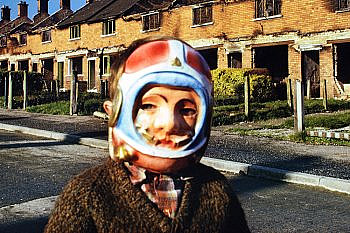
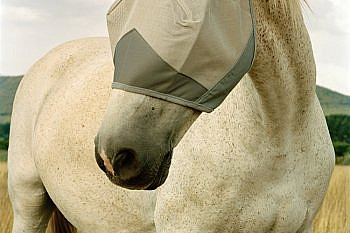


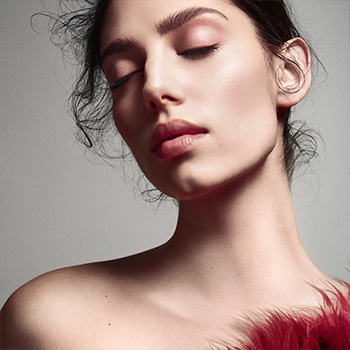



Julie Bullard, a work of photographic fiction by Nadia Lee Cohen and Martin Parr. The book is designed as a late-seventies photo album, closely modelled on an example acquired from eBay, complete with faux leather spongy board covers…

Sir Anthony Caro
Royal Academy of Arts
London
For 250 years, the RA has existed to champion art and artists. This year, we’ve opened up our newly expanded campus with free displays, new spots to eat, drink and shop, and much more.
The RA was founded in 1768 by a group of 40 artists and architects who became the first Royal Academicians. The first president was Sir Joshua Reynolds, whose statue now stands outside Burlington House.
Over the past 250 years, we’ve moved house several times, elected hundreds of new RAs and even survived the Blitz – all while continuing to stage an annual Summer Exhibition, elect new members and champion art and architecture in all its forms. Read our exceptional story here.

Eileen Cooper
The New RA
To celebrate our 250th anniversary, we’ve unveiled our newly expanded campus, with more space than ever before to make, debate and exhibit art.
The new RA has a link between our Piccadilly and Burlington Gardens galleries for the first time, a new lecture theatre, and an expanded RA Schools giving our students more space to create.
We’re run by the Royal Academicians, artists and architects elected by their peers in recognition of their exceptional work. We’re home to Britain’s longest established art school, the RA Schools. Every year since 1768 we’ve held an annual Summer Exhibition, the largest open-submission art exhibition in the world. We present our collection of art and architecture in free displays throughout our home on Piccadilly. And we put on world-class exhibitions of art from around the world, welcoming hundreds of thousands of people to our galleries each year.
We are an Academy
We have a lot in common with museums and other galleries, but as an Academy, we have a broader role – to promote not just the appreciation and understanding of art, but also its practice.
We are led by artists
Just as our founders intended, we are still led by many of the greatest artists and architects of the day. Each Royal Academician must be a practicing artist, elected by their peers in recognition of their work. Our Academicians represent many different perspectives, but we all share a deep commitment to art and a strong belief in the contribution that artists make to the world.
We are an independent charity
Unlike most of our peers, we don’t receive revenue funding from the government and so we are reliant upon the support of visitors, donors, sponsors, and the loyal Friends of the Royal Academy to continue our work.
Authored Articles
RELATED ARTICLES
Royal Academy of Arts
London
For 250 years, the RA has existed to champion art and artists. This year, we’ve opened up our newly expanded campus with free displays, new spots to eat, drink and shop, and much more.
The RA was founded in 1768 by a group of 40 artists and architects who became the first Royal Academicians. The first president was Sir Joshua Reynolds, whose statue now stands outside Burlington House.
Over the past 250 years, we’ve moved house several times, elected hundreds of new RAs and even survived the Blitz – all while continuing to stage an annual Summer Exhibition, elect new members and champion art and architecture in all its forms. Read our exceptional story here.
•
Eileen Cooper
The New RA
To celebrate our 250th anniversary, we’ve unveiled our newly expanded campus, with more space than ever before to make, debate and exhibit art.
The new RA has a link between our Piccadilly and Burlington Gardens galleries for the first time, a new lecture theatre, and an expanded RA Schools giving our students more space to create.
We’re run by the Royal Academicians, artists and architects elected by their peers in recognition of their exceptional work. We’re home to Britain’s longest established art school, the RA Schools. Every year since 1768 we’ve held an annual Summer Exhibition, the largest open-submission art exhibition in the world. We present our collection of art and architecture in free displays throughout our home on Piccadilly. And we put on world-class exhibitions of art from around the world, welcoming hundreds of thousands of people to our galleries each year.
We are an Academy
We have a lot in common with museums and other galleries, but as an Academy, we have a broader role – to promote not just the appreciation and understanding of art, but also its practice.
We are led by artists
Just as our founders intended, we are still led by many of the greatest artists and architects of the day. Each Royal Academician must be a practicing artist, elected by their peers in recognition of their work. Our Academicians represent many different perspectives, but we all share a deep commitment to art and a strong belief in the contribution that artists make to the world.
We are an independent charity
Unlike most of our peers, we don’t receive revenue funding from the government and so we are reliant upon the support of visitors, donors, sponsors, and the loyal Friends of the Royal Academy to continue our work.
Authored Articles
RELATED ARTICLES
-
Ralph Steadman: And Another ThingAug 26 – Dec 13, 2026Ralph Steadman is one of the most influential British graphic artists of the last 50 years. He is famous for his long collaboration with Hunter S. Thompson, notably illustrating Fear and Loathing in Las Vegas, which inspired two films in 1979 and 1998.
-
Chiara Camoni, The Flowers of EvilOct 9, 2026 – Jan 26, 2027
For its second exhibition since the opening of its Roman space, La Società delle Api presents I fiori del male, a project dedicated to the work of Chiara Camoni and curated by Alice Motard…
-
Jasper JohnsArtistJasper Johns was an artist that came onto the scene in the 1950s. Much of the work that he created led the American public away from the expressionism form, and towards an art movement or form known as the concrete.
-
Oulu2026: PlayJan 14 – Dec 31, 2026Fotografiska Tallinn brings a photo exhibition to Finland for the first time. Entitled PLAY, the group exhibition is part of the European Capital of Culture programme...
-
Imagining an ArchipelagoJul 11, 2026 – Jun 6, 2027Art connects islands across thousands of miles in “Imagining an Archipelago: Art from Cuba, Guam, the Philippines, Puerto Rico, and Their Diasporas.” The visually stunning exhibition brings together more than 40 contemporary artists...
-
Joseph BeuysArtistJoseph Beuys was born in 1921, in Krefeld, Germany. During his school years in Kleve, Beuys was exposed to the work of Achilles Moortgat, whose studio he often visited, and was inspired by the sculptures of Wilhelm Lehmbruck.
-
A Zona / Diogo SimõesPublication
A Zona is Diogo Simões’s first book. Twelve years in the making, it marks the arrival of a major force in Portuguese photography. All the photos were done in Margem Sul, Tagus river south bank, opposite Lisbon.
-
Alen MacWeeney: ANTHOLOGYDec 5, 2026 – Feb 7, 2027Photo Museum Ireland presents Alen MacWeeney: ANTHOLOGY, the landmark retrospective exhibition, and stunning new monograph by one of Ireland’s most significant photographers.
-
The Coming of AgeMar 26 – Nov 29, 2026
‘The Coming of Age’ features more than 120 artworks and objects, including historical artefacts and works by contemporary artists including John Coplans, Serena Korda, Suzanne Lacy, Anna Maria Maiolino, Rory Pilgrim, Paula Rego and more.
-
Constellations: Contemporary Jewelry from the Dallas Museum of ArtJul 10, 2026 – Jan 3, 2027
“Constellations: Contemporary Jewelry from the Dallas Museum of Art” showcases more than 350 works from one of the most significant contemporary jewelry collections in the United States.
-
Carsten Höller: TwoJul 14, 2026 – Jan 31, 2027
UCCA Center for Contemporary Art presents “Carsten Höller: Two,” from July 14, 2026, to January 31, 2027. Featuring some of the artist’s most iconic works alongside a selection of new pieces, the exhibition unfolds as a “Laboratory of Doubt”…
-
Petra Collins: StarBy Gaelin Rosenwaks
Inspired by 16 years of shooting some of the biggest names in the music world, witnessing the rise and fall of pop icons, and watching descents into madness, Collins created two fictional music groups exclusively for this publication.
-
Relic 4: Larry AchiampongOct 16 – Dec 12, 2026This autumn, Larry Achiampong will present his new film Relic 4 (2026) at KARST, revisiting the cinematic universe of the Relic Traveller project after a six-year hiatus. Exploring themes of fallen empire, class, and displacement...
-
The 90sOct 8, 2026 – Feb 14, 2027Guest curated by fashion industry game changer Edward Enninful OBE, whose lived experience of the decade informs the exhibition The 90s examines a defining period in which a groundswell of creativity changed
-
30 Artists Explore Bitcoin, Freedom, and SovereigntyTimechain Art Magazine Ed. 1 / Oct 29 – Nov 19, 2026Timechain Art Magazine presents Edition One, a 154-page fine-art journal featuring 30 artists working across painting, drawing, sculpture, printmaking, and mixed media.
-
Orgasmagoria by Dries VerhoevenNov 28, 2026 – Mar 6, 2027Starting November 28, Brutus Art Space will present Orgasmagoria (2026), an ongoing film by artist Dries Verhoeven about sexual gratification in the digital age. The work will premiere in November at the International Documentary Film Festival Amsterdam (IDFA).
-
Iris van Herpen: Sculpting the SensesMay 16 – Dec 6, 2026
Van Herpen transcends conventional clothing norms while embracing both traditional couture artisanship and innovative techniques. Ranging from the micro to the macro, the exhibition explores the body’s place in space…
SUBMIT YOUR ANNOUNCEMENTS
Visit our New Announcement Submission page > Announcement Submission page >