


An international cultural initiative connecting contemporary art, cultural heritage, education and sustainability between The Bahamas, Paris and the wider world. Foundation Eleutheria launches…


Ruta Jusionyte
Artist
The women in Ruta Jusionyte’s works remain women in their primeval form, a body incarnate, while men take on different forms in a versatile bestiary, alternatively deer, rabbit, bear or even Minotaur, each animal embodying a force or a virtue.
Exploring symbols and metaphors, the young Lithuanian artist is questioning our contemporary modes of relationships through contrasting concepts, alternating near and far, bond and distance, movement and stillness.
My main themes stem from the question: what is the place of the woman in contemporary society, what is a couple, what is a family?
These questions have been haunting me for the past few years and have led me to explore the states and status of the woman, the relationships between men and women and the place of the child in the context of new family settings.
But my work is first and foremost a questioning of artistic representation: what is it for a woman to paint and sculpt the body, and the body of the woman for that matter, the woman mother, lover, entrepreneur, artist all at once? What does it mean to stage a couple against the questions of parity and equality ? It’s a question that has been running through my mind and my work ever since I moved to France: what is it to be a woman, to be at the same time a wife, a worker, a lover and a mother?
My work is all at once a testimony and an exploration of the present state of relationships between men and women, their respective places within the ever changing configurations of the couple, especially in our contemporary world, with recomposed families. It is humanity that I represent through symbols and metaphors. There are multiple ways to interpret these symbols and characters, and my art is a way of translating and conveying meaning through symbolic forms.
•
-
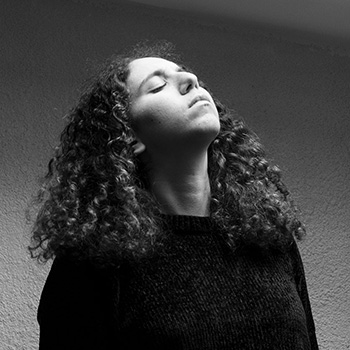
Lise SarfatiPhotographerBorn in 1958 in Oran, Algeria Lise Sarfati lives and works between Paris and Los Angeles and is represented by Yossi Milo Gallery, NY, Rose Gallery, LA, La Galerie Particulière, Paris.
-
I Want To See A Lighthouseby Gary Briechle
Gary Briechle’s practice is disciplined, almost monastic. Every day roving around Rockland, Maine in an SUV loaded with chemicals, looking at the same mundane scenes and subjects, but expecting different results.
-
SMITH: Ici Grand OuvertMay 23, 2026 – Jan 31, 2027An artist-researcher, SMITH (born 1985) navigates between photography, moving images, installation, sculpture and performance. His work develops in open cycles, often starting with photographs.
-
Carsten Höller: TwoJul 14, 2026 – Jan 31, 2027
UCCA Center for Contemporary Art presents “Carsten Höller: Two,” from July 14, 2026, to January 31, 2027. Featuring some of the artist’s most iconic works alongside a selection of new pieces, the exhibition unfolds as a “Laboratory of Doubt”…
-
Calculating Empires / Kate Crawford & Vladan JolerNov 27, 2025 – Jan 31, 2027The monumental installation Calculating Empires impressively demonstrates how power and technology have been intertwined for centuries. The work, by artist-researchers Kate Crawford and Vladan Joler, and has been acquired by Rijksmuseum Twenthe...
-
Fondazione Arte CRT: The Program2024–2027Since 2000, the Fondazione per l’Arte Moderna e Contemporanea CRT has been building a collection of modern and contemporary art for the benefit of the Piedmont community and its museum network, with acquisitions for GAM – Galleria Civica d’Arte Moderna e Contemporanea di Torino and Castello di Rivoli Museo d’Arte Contemporanea.
-
The 90sOct 8, 2026 – Feb 14, 2027Guest curated by fashion industry game changer Edward Enninful OBE, whose lived experience of the decade informs the exhibition The 90s examines a defining period in which a groundswell of creativity changed
-
Afterlife Film ProgramSep 5 – Dec 18, 2026Death is one of the few universal experiences of the human condition and, at the same time, one of the most mysterious. Throughout history, religions, spiritual traditions, philosophical schools of thought, and even science have sought to answer the same question...
-
Wallace StevensPoetMore than any other modern poet, Wallace Stevens was concerned with the transformative power of the imagination. Composing poems on his way to and from the office and in the evenings, Stevens continued to spend his days behind a desk at the office...
-
Lundahl & Seitl: The Earths Within UsNovember 2–28, 2026Swedenborg House is pleased to announce The Earths Within Us (2026) by Swedish artist duo Lundahl & Seitl, a limited run of site-sensitive embodied performances at the historic home of the Swedenborg Society throughout November.
-
The Other Side of the MountainOct 14, 2026 – Mar 21, 2027
The Other side of the Mountain brings together contemporary artists working across the African continent and within the Afro-Nordic diaspora. They explore how cities and modern landscapes shape our connections to one another…
-
Arnold J. Kemp: Not One ThingJul 28 – Dec 6, 2026
Arnold J. Kemp: Not One Thing is the first institutional survey of work by the Chicago-based artist Arnold J. Kemp (b. 1968, Boston). The exhibition focuses on Kemp’s performative and material tendencies of masking, traced through various media.
-
Doug Aitkenartist / filmmakerDoug Aitken is an American artist and filmmaker. Defying definitions of genre, he explores every medium, from film and installations to architectural interventions.
-
30 Under 30 Women Photographers / 2026 TAWNov 1 – Dec 12, 2026At the occasion of and in collaboration with Torino Art Week, Artpil proudly presents the online exhibition of the 17th Edition of the annual selection of 30 Under 30 Women Photographers 2026 taking place November 1 – December 12, 2026....
-
39th Panorama of Brazilian ArtSep 12, 2026 – Jan 24, 2027Entitled After It’s All Said, 39th Panorama of Brazilian Art, under the curatorship of Diane Lima, questions where artistic production has overflowed in the search to expand the limits of aesthetic representation through a radical exercise of imagination.
-
Anna Hulačová: AbundantiaOct 1, 2026 – Jan 10, 2027
Anna Hulačová’s figurative sculptures combine influences from Surrealism, Socialist Realism, and Czech folk art to create a distinctive cosmos of their own. Schirn Kunsthalle Frankfurt is presenting the artist’s first solo exhibition in Germany…
-
TAC! Urban Architecture Festival / Fifth EditionOct 13 – Dec 1, 2026TAC! Urban Architecture Festival celebrates its fifth edition in Spain with two temporary pavilions that explore the relationship between architecture, energy, and public space.
SUBMIT YOUR ANNOUNCEMENTS
Visit our New Announcement Submission page > Announcement Submission page >