


RELATED ARTICLES




Sara Meneses Cuapio
Photographer
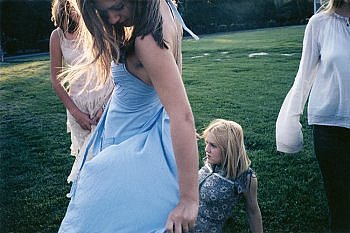
My work focuses on exploring the memory of my blood. I’m the daughter of a mestizo father and a Nahua mother (an Indigenous culture in Mexico). My interests delve into the study of identity, territory, pain, rituality, and the relationship with nature within my personal history.
My work goes back and forth between documentary photography and constructed imagery, creating tension between reality and metaphor, much like in memories or dreams. To address these symbolic aspects, I rely on both writing and oral storytelling. I believe editorial work in Mexico remains mostly controlled by highly privileged circles, which determine what information is deemed valuable enough to be published in a book. If knowledge doesn’t serve for political, economic, or class purposes, it survives orally, fading in breath. Echoing this, I use blurred edges and mist to speak about the right to memory. I emulate this by fogging my camera lens with my breath, producing unexpected and unrepeatable results that also reflect a pulse of mine.
The night, as a time filled with blind spots where the hidden prevails and social norms are transgressed, is a recurring concern in my gaze. I am drawn to the visceral aspects of human existence. Darkness, my color palette, and light accents in my work also have aesthetic roots. My grandparents were sacred singers who spoke Nahuatl but sang in Latin. This syncretism in my family is evident in my work, in the themes I address, and in the chiaroscuro influenced by the old oil paintings darkened by time, that I grew up seeing in baroque churches. Mexican art is often expected to conform to a colorful canon. My work seeks to challenge this stereotype, by suggesting that there is no single way to be Mexican but many.
Currently, by offering workshops, lectures, and exhibiting my photographs in schools and cultural centers in rural areas of Tlaxcala, I strive for my work to live in the spaces and among the people who shaped my worldview. Decentralizing art and bringing photography to spaces without specialized schools, nor museums, or galleries is an ethical pillar for me. I believe it’s urgent for younger generations in rural regions to rethink representation systems rather than perpetuating the methodologies used by foreign photographers seeking folkloric bodies.
I studied for a BA Degree in Craft Design (2013–2017) at the University of Guadalajara, with additional study residencies in Art History and Social Anthropology (2018). In 2020, I completed the International Diploma in Cultural Heritage at the National Institute of Anthropology and History (INAH). In 2022, I graduated from the Photography Production Seminar at the Centro de la Imagen in Mexico City and was awarded the Young Creators Grant by the National Fund for Culture and the Arts (FONCA). In 2023, I was nominated for the Ones to Watch by the British Journal of Photography. In 2024, I was a finalist for the Leica Oskar Barnack Award and was selected to participate in the exhibition of the 9th edition of the PhotoVogue Festival in Milan. My work has been exhibited in Mexico and abroad.
•
RELATED ARTICLES


-
Max BeckmannArtist / PainterMax Beckmann (1884–1950) was a German painter, draftsman, printmaker, sculptor, and writer. Although he is classified as an Expressionist artist, he rejected both the term and the movement.
-
Our 9th Year AnniversaryArtpil / Prescription 176Here we are again, this time, rounding out our ninth year with 7,000 pages of Articles, Profiles, and Announcements in our growing archive and over 10 million visits strong. A very exciting journey it has been ...
-
Eija-Liisa Ahtila: A Possible ImageOct 3, 2026 – Jan 31, 2027In the exhibition A Possible Image – of what is just becoming reality, Eija-Liisa Ahtila explores the interplay between humans and other forms of life within the ecological realm, and how we might understand change.
-
Iris van Herpen: Sculpting the SensesMay 16 – Dec 6, 2026
Van Herpen transcends conventional clothing norms while embracing both traditional couture artisanship and innovative techniques. Ranging from the micro to the macro, the exhibition explores the body’s place in space…
-
Afterlife Film ProgramSep 5 – Dec 18, 2026Death is one of the few universal experiences of the human condition and, at the same time, one of the most mysterious. Throughout history, religions, spiritual traditions, philosophical schools of thought, and even science have sought to answer the same question...
-
Relic 4: Larry AchiampongOct 16 – Dec 12, 2026This autumn, Larry Achiampong will present his new film Relic 4 (2026) at KARST, revisiting the cinematic universe of the Relic Traveller project after a six-year hiatus. Exploring themes of fallen empire, class, and displacement...
-
OFFSCREEN: 5th editionOctober 20–25, 2026OFFSCREEN Paris is a nomadic event that values contemporary, historic and avant-garde artists with image-based practices. With its distinct voice, it is a must-see highlight of Paris Art Week each October...
-
The Present as FoundOctober 2–23, 2026The divergent creative practices of this year’s Zvono Award finalists – Ljiljana Arsić, Isidora Branković, Mustafa Mlinarević, and Emina Veladžić – have shaped a media-heterogeneous, methodologically diverse, and conceptually multilayered exhibition.
-
Mohammed Sami: HostlessOct 3, 2026 – Jan 3, 2027In his new body of work Hostless, Mohammed Sami focuses predominantly on internal spaces. The paintings become a site for mnemonic processes, mental operations in which abstraction falters and something unsettling begins to seep through.
-
Ulrich Seidl: On Life, Love, and DeathSep 19, 2026 – Jan 31, 2027Eye Filmmuseum presents Ulrich Seidl – Über das Leben, die Liebe und den Tod, the first exhibition – and the first complete film overview – of the renowned Austrian filmmaker in the Netherlands.
-
Constellations: Contemporary Jewelry from the Dallas Museum of ArtJul 10, 2026 – Jan 3, 2027
“Constellations: Contemporary Jewelry from the Dallas Museum of Art” showcases more than 350 works from one of the most significant contemporary jewelry collections in the United States.
-
Robert Rauschenberg & the NewsFeb 19, 2026 – Jan 4, 2027The New School Art Collection and the Vera List Center for Art and Politics are pleased to present Robert Rauschenberg & the News: Select Prints from The New School Art Collection...
-
Anselm KieferArtistAnselm Kiefer was born in 1945, in Donaueschingen in the German state of Baden-Württemberg. After taking courses in law at Albert-Ludwigs-Universität in Freiburg from 1965 to 1966, he studied art there under Peter Dreher.
-
Fritz ScholderApr 25 – Oct 25, 2026In a softly shimmering blue, then brown, then green, then gray, then pink, then green, then violet, then blue again, the colors of present day New Mexico landscapes are layered horizontally.
-
The Coming of AgeMar 26 – Nov 29, 2026
‘The Coming of Age’ features more than 120 artworks and objects, including historical artefacts and works by contemporary artists including John Coplans, Serena Korda, Suzanne Lacy, Anna Maria Maiolino, Rory Pilgrim, Paula Rego and more.
-
Alain LaboilePhotographerBorn on May 1, 1968 in Bordeaux, France, Alain Laboile is a photographer and father of six. In 2004, as he needed to put together a portfolio of his work as a sculptor, he acquired a camera, and thus developed a taste for macrophotography...
-
The Wild Gene / Ivana FischerSep 18 – Nov 7, 2026“Childhood is a frightening place. Only when considered from a great distance, whether that be across space or time, can it appear carefree and idyllic. Because growing up is always marked by changes that cannot be controlled...
-
Wolf TonesOct 3, 2026 – Apr 4, 2027
Wolf Tones presents the work of six artists as a refracted analogy of an acoustic phenomenon. The wolf tone is an irregular vibration produced by a musical instrument such as the cello. It is the result of an acoustic conflict produced by its wooden body.
SUBMIT YOUR ANNOUNCEMENTS
Visit our New Announcement Submission page > Announcement Submission page >
Visit our New Announcement Submission page > Announcement Submission page >


