

Te Tuhi strives to live up to the legacy of exploration by being one of New Zealand’s foremost contemporary art spaces known for its core function of commissioning ambitious new artworks by a diverse selection of artists. The organisation is also renowned for supporting curatorial research resulting in exhibitions that are locally engaged, regionally responsive and internationally ambitious with a strong awareness of social, political and environmental issues.
Te Tuhi’s annual programs include four seasons of major group and solo exhibitions and a series of live events and offsite projects. These are supported by a range of education and public programs that actively engage school students, local artists and makers, community and cultural organisations and the general public with the contemporary art world.
Te Tuhi’s history can be traced back to the early 1960s with the formation of the Pakuranga Arts Society. Founded by a group of forward-thinking creative women, the Arts Society held their first meetings in a garden shed before going on to open New Zealand’s first purpose-built arts center in 1975. In the decades that followed, Te Tuhi created a legacy of supporting the careers of New Zealand’s most accomplished artists.
Te Tuhi has worked with many nationally and internationally established artists. In recognizing emerging artistic talent, Te Tuhi has also been influential in the careers of artists through artworks commissioned by Te Tuhi which have been nominated for national and international art awards or acquired for significant collections and exhibited in galleries and museums around the world.


Albert Ashton

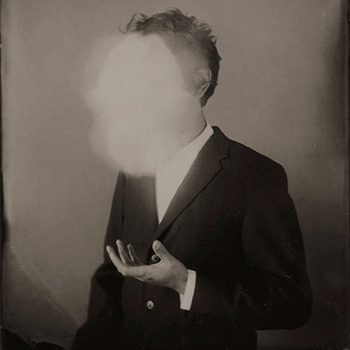
Shannon Te Ao

Rosanna Raymond

Antonio Paucar

FAFSWAG

Gayle Chong Kwan

The Maldives Exodus Caravan Show / Photo Sam Hartnett

John Vea

Olivia Webb

Jeremy Leatinu’u

Tim Veling

Te Tuhi strives to live up to the legacy of exploration by being one of New Zealand’s foremost contemporary art spaces known for its core function of commissioning ambitious new artworks by a diverse selection of artists. The organisation is also renowned for supporting curatorial research resulting in exhibitions that are locally engaged, regionally responsive and internationally ambitious with a strong awareness of social, political and environmental issues.
Te Tuhi’s annual programs include four seasons of major group and solo exhibitions and a series of live events and offsite projects. These are supported by a range of education and public programs that actively engage school students, local artists and makers, community and cultural organisations and the general public with the contemporary art world.
Te Tuhi’s history can be traced back to the early 1960s with the formation of the Pakuranga Arts Society. Founded by a group of forward-thinking creative women, the Arts Society held their first meetings in a garden shed before going on to open New Zealand’s first purpose-built arts center in 1975. In the decades that followed, Te Tuhi created a legacy of supporting the careers of New Zealand’s most accomplished artists.
Te Tuhi has worked with many nationally and internationally established artists. In recognizing emerging artistic talent, Te Tuhi has also been influential in the careers of artists through artworks commissioned by Te Tuhi which have been nominated for national and international art awards or acquired for significant collections and exhibited in galleries and museums around the world.
Albert Ashton
Shannon Te Ao
Rosanna Raymond
Antonio Paucar
FAFSWAG
Gayle Chong Kwan
The Maldives Exodus Caravan Show / Photo Sam Hartnett
John Vea
Olivia Webb
Jeremy Leatinu’u
Tim Veling




-
Relic 4: Larry AchiampongOct 16 – Dec 12, 2026This autumn, Larry Achiampong will present his new film Relic 4 (2026) at KARST, revisiting the cinematic universe of the Relic Traveller project after a six-year hiatus. Exploring themes of fallen empire, class, and displacement...
-
Shenzhen Art and Technology BiennaleMay 30, 2026 – Apr 30, 2027The inaugural edition of the Shenzhen Art and Technology Biennale (SATB) opens to the public from May 30, 2026, to April 30, 2027 at Shenzhen International Museum of Art (SIMoA). With its theme A Glimpse of the Infinite, this edition is directed by Zikang Zhang.
-
Joseph BeuysArtistJoseph Beuys was born in 1921, in Krefeld, Germany. During his school years in Kleve, Beuys was exposed to the work of Achilles Moortgat, whose studio he often visited, and was inspired by the sculptures of Wilhelm Lehmbruck.
-
Aesthetica Film Festival 2026November 4–8, 2026Aesthetica Film Festival announces its most expansive programme to date, with York set to become a meeting point for the people shaping the future of film, television, art, sound, games and immersive media this November.
-
Arthur Boyd: TapestriesJun 18 – Oct, 18, 2026
Boyd commissioned the tapestries, part of his extensive artistic exploration of the life of Saint Francis, from the Manufactura de Tapeçarias de Portalegre, Portugal, and they were purchased by the National Gallery in 1975
-
Arnold J. Kemp: Not One ThingJul 28 – Dec 6, 2026
Arnold J. Kemp: Not One Thing is the first institutional survey of work by the Chicago-based artist Arnold J. Kemp (b. 1968, Boston). The exhibition focuses on Kemp’s performative and material tendencies of masking, traced through various media.
-
Max BeckmannArtist / PainterMax Beckmann (1884–1950) was a German painter, draftsman, printmaker, sculptor, and writer. Although he is classified as an Expressionist artist, he rejected both the term and the movement.
-
untame flow stay releaseAug 31 – Nov 29, 2026untame flow stay release presents artistic practices undertaken in response to unjust, environmentally toxic and ableist structures – systems that continue to suppress individuals and communities by individualizing violence...
-
Calculating Empires / Kate Crawford & Vladan JolerNov 27, 2025 – Jan 31, 2027The monumental installation Calculating Empires impressively demonstrates how power and technology have been intertwined for centuries. The work, by artist-researchers Kate Crawford and Vladan Joler, and has been acquired by Rijksmuseum Twenthe...
-
Lotta Antonsson: I Am EverythingApr 25 – Nov 29, 2026One of Sweden’s leading contemporary photographers, Lotta Antonsson, is coming to Fotografiska with I Am Everything. In this exhibition, the artist explores themes of gender, identity, and objectification within a visual world
-
Ryuichi SakamotoComposer / MusicianIf Ryuichi Sakamoto had been born in 16th century Italy, we’d know what to call him: a Renaissance Man. But since he was born in Japan in the mid-20th century, we have to string together words like composer, musician, producer, actor, and environmental activist.
-
Performing Arts Season2026–2027In today’s world, our commitment to connecting community with world-class creative innovators has never been more vital. Vanguard dance, music, and adventurous theater artists offer fresh ideas and energy, while bringing us together...
-
Venice Biennale 202661st International Art ExhibitionThe 61st International Art Exhibition of La Biennale di Venezia – In Minor Keys by Koyo Kouoh (1967–2025) – will run from Saturday 9 May to Sunday 22 November 2026 (preview 6, 7, 8 May) at the Giardini and the Arsenale venues, and in various locations around Venice.
-
Todd Hido: #2424-1, 1999 / #3878, 2005from the series Between the TwoPrinted Matter is thrilled to announce the second [#2424-1, 1999] and third [#3878, 2005] in a series of three fundraising Risograph-print editions by the artist Todd Hido. These two images bookend Hido’s most recent Risograph print...
-
Our 9th Year AnniversaryArtpil / Prescription 176Here we are again, this time, rounding out our ninth year with 7,000 pages of Articles, Profiles, and Announcements in our growing archive and over 10 million visits strong. A very exciting journey it has been ...
-
Marc Chagall: The CircusNov 21, 2026 – Apr 25, 2027
Throughout his prolific career, Marc Chagall (1887–1985) returned time and again to the vivid imagery of acrobats, clowns and fantastical performers. Marc Chagall: The Circus will present Chagall’s celebrated lithographs on this subject…
-
The Coming of AgeMar 26 – Nov 29, 2026
‘The Coming of Age’ features more than 120 artworks and objects, including historical artefacts and works by contemporary artists including John Coplans, Serena Korda, Suzanne Lacy, Anna Maria Maiolino, Rory Pilgrim, Paula Rego and more.
-
In Our Time: R. B. Kitaj and BooksJun 17 – Nov 8, 2026
The exhibition presents Kitaj’s complete portfolio, rarely exhibited in its entirety, of fifty silkscreen prints, created between 1969 and 1970, titled In Our Time: Covers for a Small Library After the Life for the Most Part.
Visit our New Announcement Submission page > Announcement Submission page >


