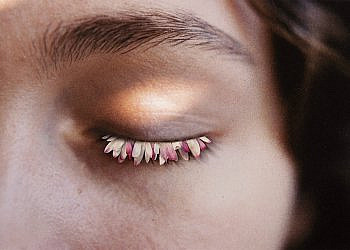
My practice is driven by the need to rehumanize what has been dehumanized, to bring connection to those who have been severed from one another at the hands of institutionalization. Half of the images that I am submitting for this open call form part of my ongoing photo series “The Lunatics’ Common Room”, an artistic engagement with the lives of those who found themselves deprived of their personal autonomy in mental asylums over the past three centuries. In defiance of attempts to simply reduce or limit them to the role of madman / madwoman, it explores them as unique individuals who have something to say to us now. The writers and artists to whom the photographs form a response include John Thomas Perceval, Unica Zürn, Antonin Artaud, Bessie Head, Osamu Dazai and Valérie Valère.
The photographs are not attempts at reconstruction or diagnosis, but acts of witness, acknowledging the traces left behind and the realities still lived today. Each image is a conversation across time, a gesture of recognition between individuals whose voices have been silenced and dismissed. In bringing fragments of the past into dialogue with the present, I aim to challenge the viewer to reconsider what it means to define someone as “mentally ill”, “mad,” and “other” and invite reflection on the experiences and treatment of those deemed so, then and now.
My own experience of being hospitalised informs this series greatly. The memories, both disorienting and clarifying, shape the way I look at those who came before me, and deepen my commitment to portraying them – and all of us who have passed through such doors – with dignity, nuance, and a reclaimed narrative. I envisage “The Lunatics’ Common Room” as a shared space outside institutional boundaries, an imagined ‘room of our own’.

I am a UK-based photographer (b. 2003) who uses found objects and improvised props to construct staged images that explore narratives of confinement, constraint, and isolation, alongside capturing evocative natural scenes. Rooted in childhood encounters with the mental health system and shaped by a self-directed, autodidactic approach, my practice interrogates systems of control and the social construction of madness. I am particularly interested in how girlhood vulnerability is frequently read as pathology, and how girls’ emotions, behaviours, and bodies are shaped, monitored, and disciplined within systems of care, education, and mental health. The worlds I build are in dialogue with these concerns, a dialogue through which I aim to develop a visual language that not only critiques normative frameworks but also offers an embodied, affective encounter with the themes at the heart of my work. I engage with theoretical, fictional, and autobiographical texts concerned with power and institutionalization, extracting words and phrases that resonate with my own experience and generate visual impulses, which then become photographs.
I left formal education at the age of 15 with no qualifications, and self-educated myself subsequently. I have recently started an MA in Creative Practice, and have had work exhibited in the UK, China, and Greece.
My photography draws attention to that which is often overlooked, whether through research-based work or the quiet observation of the world around me.
My practice is driven by the need to rehumanize what has been dehumanized, to bring connection to those who have been severed from one another at the hands of institutionalization. Half of the images that I am submitting for this open call form part of my ongoing photo series “The Lunatics’ Common Room”, an artistic engagement with the lives of those who found themselves deprived of their personal autonomy in mental asylums over the past three centuries. In defiance of attempts to simply reduce or limit them to the role of madman / madwoman, it explores them as unique individuals who have something to say to us now. The writers and artists to whom the photographs form a response include John Thomas Perceval, Unica Zürn, Antonin Artaud, Bessie Head, Osamu Dazai and Valérie Valère.
The photographs are not attempts at reconstruction or diagnosis, but acts of witness, acknowledging the traces left behind and the realities still lived today. Each image is a conversation across time, a gesture of recognition between individuals whose voices have been silenced and dismissed. In bringing fragments of the past into dialogue with the present, I aim to challenge the viewer to reconsider what it means to define someone as “mentally ill”, “mad,” and “other” and invite reflection on the experiences and treatment of those deemed so, then and now.
My own experience of being hospitalised informs this series greatly. The memories, both disorienting and clarifying, shape the way I look at those who came before me, and deepen my commitment to portraying them – and all of us who have passed through such doors – with dignity, nuance, and a reclaimed narrative. I envisage “The Lunatics’ Common Room” as a shared space outside institutional boundaries, an imagined ‘room of our own’.


-
Suki Seokyeong Kang: Mountain – Hour – FaceOct 30, 2026 – Jan 24, 2027Featuring nearly 40 works created between 2014 and 2024, “Suki Seokyeong Kang: Mountain—Hour—Face” is the first solo exhibition by a South Korean artist in the McNay Art Museum’s history.
-
Carsten Höller: TwoJul 14, 2026 – Jan 31, 2027
UCCA Center for Contemporary Art presents “Carsten Höller: Two,” from July 14, 2026, to January 31, 2027. Featuring some of the artist’s most iconic works alongside a selection of new pieces, the exhibition unfolds as a “Laboratory of Doubt”…
-
Stan Douglas: ParallaxOct 20, 2026 – Jan 10, 2027Jeu de Paume is proud to present Parallax, the largest monographic exhibition devoted to Stan Douglas in France for over thirty years. Born in Vancouver in 1960, this artist, a major figure on the international contemporary art scene...
-
Ulrich Seidl: On Life, Love, and DeathSep 19, 2026 – Jan 31, 2027Eye Filmmuseum presents Ulrich Seidl – Über das Leben, die Liebe und den Tod, the first exhibition – and the first complete film overview – of the renowned Austrian filmmaker in the Netherlands.
-
Housekeeping in a Dangerous TimeApr 24 – Dec 31, 2026Housekeeping in a Dangerous Time looks into artistic practices that engage with the contemporary forces shaping intergenerational ties and the distinctions between life stages.
-
Torino Art Week 2026Fall 2026This fall Turin host its annual Torino Art Week. With a shared objective of institutional and collateral art fairs, and the participation of museums, galleries and independent spaces throughout the city, Torino Art Week 2026 opens with a huge calendar…
-
39th Panorama of Brazilian ArtSep 12, 2026 – Jan 24, 2027Entitled After It’s All Said, 39th Panorama of Brazilian Art, under the curatorship of Diane Lima, questions where artistic production has overflowed in the search to expand the limits of aesthetic representation through a radical exercise of imagination.
-
Alice RohrwacherFilmmaker / DirectorAlice Rohrwacher was born in 1982 in Fiesole, Tuscany, Italy. She is a writer and director, known for Le Meraviglie (The Wonder), 2014, Corpo Celeste (Heavenly Body), 2011, and 9×10 novanta (2014).
-
Tiffany Sia: Overt ListeningNov 13, 2026 – Jan 24, 2027Kunsthalle Wien presents the first institutional solo exhibition in Austria by Tiffany Sia (b. 1988, Hong Kong). Overt Listening is centred around a new film which takes as its subject the Kinmen Islands in Taiwan, just a few kilometres off the Chinese coast.
-
Constellations: Contemporary Jewelry from the Dallas Museum of ArtJul 10, 2026 – Jan 3, 2027
“Constellations: Contemporary Jewelry from the Dallas Museum of Art” showcases more than 350 works from one of the most significant contemporary jewelry collections in the United States.
-
Sean ScullyArtistSean Scully is one of the most important painters of his generation. While known primarily for his large-scale abstract paintings, Scully also works in a variety of diverse media, including printmaking, sculpture, watercolor and pastel.
-
Joseph BeuysArtistJoseph Beuys was born in 1921, in Krefeld, Germany. During his school years in Kleve, Beuys was exposed to the work of Achilles Moortgat, whose studio he often visited, and was inspired by the sculptures of Wilhelm Lehmbruck.
-
Uri Aran: Look How Hard They WorkOct 23, 2026 – Feb 28, 2027Uri Aran arranges objects and images the way one might spatially illustrate a scene with whatever is on a dinner table, letting a salt shaker stand for a person and a napkin for a museum, for example.
-
Wolf TonesOct 3, 2026 – Apr 4, 2027
Wolf Tones presents the work of six artists as a refracted analogy of an acoustic phenomenon. The wolf tone is an irregular vibration produced by a musical instrument such as the cello. It is the result of an acoustic conflict produced by its wooden body.
-
Alen MacWeeney: ANTHOLOGYDec 5, 2026 – Feb 7, 2027Photo Museum Ireland presents Alen MacWeeney: ANTHOLOGY, the landmark retrospective exhibition, and stunning new monograph by one of Ireland’s most significant photographers.
-
Iris van Herpen: Sculpting the SensesMay 16 – Dec 6, 2026
Van Herpen transcends conventional clothing norms while embracing both traditional couture artisanship and innovative techniques. Ranging from the micro to the macro, the exhibition explores the body’s place in space…
-
Oulu2026: PlayJan 14 – Dec 31, 2026Fotografiska Tallinn brings a photo exhibition to Finland for the first time. Entitled PLAY, the group exhibition is part of the European Capital of Culture programme...
-
Ordinary GriefA Story of ReconciliationOrdinary Grief is a story of tenuous reconciliation. In 2017, I returned to Iran after 25 years of self-exile, where I embarked on a personal and political reclamation of my identity and history.
Visit our New Announcement Submission page > Announcement Submission page >