


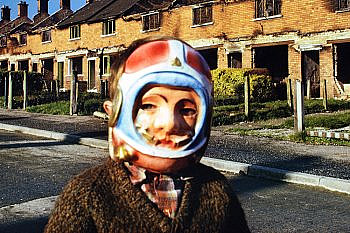
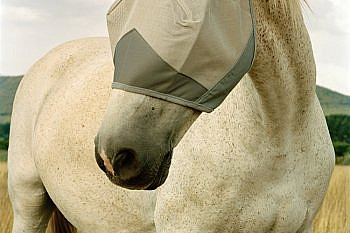


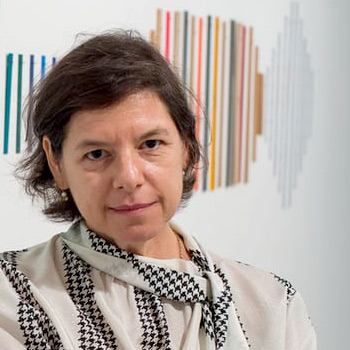


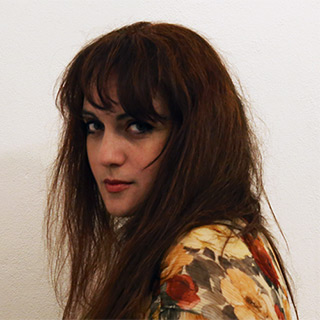


Arnold J. Kemp: Not One Thing is the first institutional survey of work by the Chicago-based artist Arnold J. Kemp (b. 1968, Boston). The exhibition focuses on Kemp’s performative and material tendencies of masking, traced through various media.

Whitney Museum of American Art
New York
As the preeminent institution devoted to the art of the United States, the Whitney Museum of American Art presents the full range of twentieth-century and contemporary American art, with a special focus on works by living artists. The Whitney is dedicated to collecting, preserving, interpreting, and exhibiting American art, and its collection – arguably the finest holding of twentieth-century American art in the world – is the Museum’s key resource. The Museum’s signature exhibition, the Biennial, is the country’s leading survey of the most recent developments in American art.
Innovation has been a hallmark of the Whitney since its beginnings. It was the first museum dedicated to the work of living American artists and the first New York museum to present a major exhibition of a video artist (Nam June Paik in 1982). Such figures as Jasper Johns, Cy Twombly, and Cindy Sherman were given their first museum retrospectives by the Whitney. The Museum has consistently purchased works within the year they were created, often well before the artists became broadly recognized. The Whitney was the first museum to take its exhibitions and programming beyond its walls by establishing corporate-funded branch facilities, and the first museum to undertake a program of collection-sharing (with the San Jose Museum of Art) in order to increase access to its renowned collection.
Designed by architect Renzo Piano and situated between the High Line and the Hudson River, the Whitney’s new building vastly increases the Museum’s exhibition and programming space, providing the most expansive view ever of its unsurpassed collection of modern and contemporary American art.
Authored Articles
RELATED ARTICLES
Whitney Museum of American Art
New York
As the preeminent institution devoted to the art of the United States, the Whitney Museum of American Art presents the full range of twentieth-century and contemporary American art, with a special focus on works by living artists. The Whitney is dedicated to collecting, preserving, interpreting, and exhibiting American art, and its collection – arguably the finest holding of twentieth-century American art in the world – is the Museum’s key resource. The Museum’s signature exhibition, the Biennial, is the country’s leading survey of the most recent developments in American art.
Innovation has been a hallmark of the Whitney since its beginnings. It was the first museum dedicated to the work of living American artists and the first New York museum to present a major exhibition of a video artist (Nam June Paik in 1982). Such figures as Jasper Johns, Cy Twombly, and Cindy Sherman were given their first museum retrospectives by the Whitney. The Museum has consistently purchased works within the year they were created, often well before the artists became broadly recognized. The Whitney was the first museum to take its exhibitions and programming beyond its walls by establishing corporate-funded branch facilities, and the first museum to undertake a program of collection-sharing (with the San Jose Museum of Art) in order to increase access to its renowned collection.
Designed by architect Renzo Piano and situated between the High Line and the Hudson River, the Whitney’s new building vastly increases the Museum’s exhibition and programming space, providing the most expansive view ever of its unsurpassed collection of modern and contemporary American art.
•
Authored Articles
RELATED ARTICLES
-
Rencontres d’ArlesPhotography FestivalEvery summer since 1970, over the course of more than forty exhibitions at various of the city’s exceptional heritage sites, the Rencontres d’Arles has been a major influence in disseminating the best of world photography...
-
Marc Chagall: The CircusNov 21, 2026 – Apr 25, 2027
Throughout his prolific career, Marc Chagall (1887–1985) returned time and again to the vivid imagery of acrobats, clowns and fantastical performers. Marc Chagall: The Circus will present Chagall’s celebrated lithographs on this subject…
-
Julie Bullard / Nadia Lee Cohen & Martin ParrPublication
Julie Bullard, a work of photographic fiction by Nadia Lee Cohen and Martin Parr. The book is designed as a late-seventies photo album, closely modelled on an example acquired from eBay, complete with faux leather spongy board covers…
-
Ryuichi Sakamoto | Seeing Sound, Hearing TimeOct 31, 2026 – Mar 14, 2027Ryuichi Sakamoto | seeing sound, hearing time surveys the pioneering artistic practice of the late composer and artist Ryuichi Sakamoto (1952–2023) from the 2000s onward. The exhibition illuminates how Sakamoto transcended the boundaries of sound, image, digital technology...
-
Ibrahim Mahama: The Time of HarvestsOct 22, 2026 – Feb 28, 2027The Cartier Foundation for Contemporary Art presents The Time of Harvests (Le Temps des récoltes), an exhibition of unprecedented scale in France by Ghanaian artist Ibrahim Mahama, accompanied by nine associated artists...
-
Whitney Lynn: Atomic Open HouseOct 25, 2026 – Oct 24, 2027Black Cube Nomadic Art Museum is pleased to present Atomic Open House, a large-scale, site-specific artwork in Beatty, Nevada by Artist Fellow Whitney Lynn. On view outdoors from sunrise to sunset, Atomic Open House turns the architecture...
-
Nadav Kander: The Edge of ThingsSep 18, 2026 – Jan 20, 2027Foam presents The Edge of Things, a major solo exhibition of the internationally renowned artist Nadav Kander. Over more than three decades, Kander has created some of the most celebrated images in contemporary photography...
-
Chiara Camoni, The Flowers of EvilOct 9, 2026 – Jan 26, 2027
For its second exhibition since the opening of its Roman space, La Società delle Api presents I fiori del male, a project dedicated to the work of Chiara Camoni and curated by Alice Motard…
-
Ahn Chang-Hong: noon-moolSep 5 – Dec 6, 2026American University Museum is honored to present noon-mool, a major solo exhibition by Korean artist Ahn Chang-Hong. Occupying both the second and third floors of the museum, the exhibition offers a rare opportunity...
-
Hybrids: Forging New Realities as Counter NarrativePublicationHYBRIDS: Forging New Realities as Counter-Narrative aims to explore the new atmosphere of trans-disciplinary experimentation across divergent fields and sectors in the arts.
-
Foundation Eleutheria Launches During Art Basel ParisInternational cultural initiative
An international cultural initiative connecting contemporary art, cultural heritage, education and sustainability between The Bahamas, Paris and the wider world. Foundation Eleutheria launches…
-
Miles AldridgePhotographerMiles Aldridge’s hyperreal women have long been a focal point of his instantly recognizable color-blown images. With a bulging portfolio of more than two decades’ work, he has shot everyone from models of the moment Siri Tollerød and Cara Delevingne, to supermodel iconoclasts, such as ex-wife Kristen McMenamy.
-
Wolf TonesOct 3, 2026 – Apr 4, 2027
Wolf Tones presents the work of six artists as a refracted analogy of an acoustic phenomenon. The wolf tone is an irregular vibration produced by a musical instrument such as the cello. It is the result of an acoustic conflict produced by its wooden body.
-
Imagining an ArchipelagoJul 11, 2026 – Jun 6, 2027Art connects islands across thousands of miles in “Imagining an Archipelago: Art from Cuba, Guam, the Philippines, Puerto Rico, and Their Diasporas.” The visually stunning exhibition brings together more than 40 contemporary artists...
-
Orgasmagoria by Dries VerhoevenNov 28, 2026 – Mar 6, 2027Starting November 28, Brutus Art Space will present Orgasmagoria (2026), an ongoing film by artist Dries Verhoeven about sexual gratification in the digital age. The work will premiere in November at the International Documentary Film Festival Amsterdam (IDFA).
-
Fondazione Arte CRT: The Program2024–2027Since 2000, the Fondazione per l’Arte Moderna e Contemporanea CRT has been building a collection of modern and contemporary art for the benefit of the Piedmont community and its museum network, with acquisitions for GAM – Galleria Civica d’Arte Moderna e Contemporanea di Torino and Castello di Rivoli Museo d’Arte Contemporanea.
-
Stan Douglas: ParallaxOct 20, 2026 – Jan 10, 2027Jeu de Paume is proud to present Parallax, the largest monographic exhibition devoted to Stan Douglas in France for over thirty years. Born in Vancouver in 1960, this artist, a major figure on the international contemporary art scene...
SUBMIT YOUR ANNOUNCEMENTS
Visit our New Announcement Submission page > Announcement Submission page >
Visit our New Announcement Submission page > Announcement Submission page >


