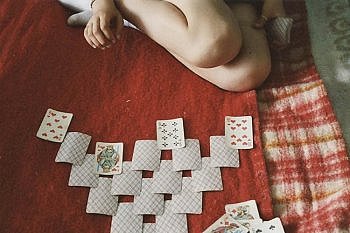


Born in 1938 and brought up for a short while in Osaka, Japan, Daido Moriyama spent much of his childhood on the move, due to his father’s profession as a travelling insurance salesman.
Moriyama studied graphic design and, in the 1960s, moved to Tokyo to work with the VIVO group of photographers, which included Eikoh Hosoe and Shomei Tomatsu. Accompanied by a surge in Japanese economic growth and mass culture, Moriyama was published in several magazines and journals, earning him the accolade of Most Promising Photographer by the Japan Photography Critics Association.
Moriyama was a member of PROVOKE Magazine at the time of international youth movements and unrest in 1968. The magazine, and Moriyama’s photography, sought to assert an independence over the classically held notion of photography as purely a visual sign. He was aware that the camera can not offer a complete record and it is in this very partialness that the real excitement and enigma in his work arises.
Exploring themes of self-expression, the disfiguration of urban landscapes, eroticism and fading Japanese traditions, Moriyama remarked that one of photography’s essential qualities is its amateurism, and another its anonymity. These have numbered among his preoccupations from the beginning and most of Moriyama’s images follow a snapshot aesthetic, often taken while running or from a moving car, without the use of a viewfinder.
This monograph on Moriyama follows a chronological order, identifying major themes and examining key works; a beautifully produced, affordable introduction to one of the most influential figures in photography today.
[Phaidon]


-
The 90sOct 8, 2026 – Feb 14, 2027Guest curated by fashion industry game changer Edward Enninful OBE, whose lived experience of the decade informs the exhibition The 90s examines a defining period in which a groundswell of creativity changed
-
Mossi Traoré: Fashion, TooMay 20 – Nov 16, 2026After the success of the exhibition “Fashion Folklore”, the Mucem dedicates its 2026 season to Mossi Traoré, a singular voice on the French fashion scene, for whom couture becomes a field of experimentation...
-
Ralph Steadman: And Another ThingAug 26 – Dec 13, 2026Ralph Steadman is one of the most influential British graphic artists of the last 50 years. He is famous for his long collaboration with Hunter S. Thompson, notably illustrating Fear and Loathing in Las Vegas, which inspired two films in 1979 and 1998.
-
Rencontres d’ArlesPhotography FestivalEvery summer since 1970, over the course of more than forty exhibitions at various of the city’s exceptional heritage sites, the Rencontres d’Arles has been a major influence in disseminating the best of world photography...
-
Studio Museum in HarlemNew York, USAThe Studio Museum in Harlem is the nexus for artists of African descent locally, nationally and internationally and for work that has been inspired and influenced by black culture. It is a site for the dynamic exchange of ideas about art and society.
-
Urban Art Biennale 2026May 15 – Nov 15, 2026The URBAN ART BIENNALE is one of the world’s largest exhibitions of this anarchic art form, which transcends conventional ‘white cube’ aesthetics. Since 2011, every two years, the entire site of the Völklinger Hütte enters into dialog with this art form...
-
Ulrich Seidl: On Life, Love, and DeathSep 19, 2026 – Jan 31, 2027Eye Filmmuseum presents Ulrich Seidl – Über das Leben, die Liebe und den Tod, the first exhibition – and the first complete film overview – of the renowned Austrian filmmaker in the Netherlands.
-
The Wild Gene / Ivana FischerSep 18 – Nov 7, 2026“Childhood is a frightening place. Only when considered from a great distance, whether that be across space or time, can it appear carefree and idyllic. Because growing up is always marked by changes that cannot be controlled...
-
The Coming of AgeMar 26 – Nov 29, 2026
‘The Coming of Age’ features more than 120 artworks and objects, including historical artefacts and works by contemporary artists including John Coplans, Serena Korda, Suzanne Lacy, Anna Maria Maiolino, Rory Pilgrim, Paula Rego and more.
-
Robert Rauschenberg & the NewsFeb 19, 2026 – Jan 4, 2027The New School Art Collection and the Vera List Center for Art and Politics are pleased to present Robert Rauschenberg & the News: Select Prints from The New School Art Collection...
-
Relic 4: Larry AchiampongOct 16 – Dec 12, 2026This autumn, Larry Achiampong will present his new film Relic 4 (2026) at KARST, revisiting the cinematic universe of the Relic Traveller project after a six-year hiatus. Exploring themes of fallen empire, class, and displacement...
-
SMITH: Ici Grand OuvertMay 23, 2026 – Jan 31, 2027An artist-researcher, SMITH (born 1985) navigates between photography, moving images, installation, sculpture and performance. His work develops in open cycles, often starting with photographs.
-
Luo Yang: GirlsPublicationLuo Yang, female, born in 1984, liaoning Province China. Graduated from the lu Xun academy of Fine arts, now lives and works in Beijing as a freelance photographer. Girls has been an ongoing photography project since 2007, and has involved me shooting the girls around me...
-
Calculating Empires / Kate Crawford & Vladan JolerNov 27, 2025 – Jan 31, 2027The monumental installation Calculating Empires impressively demonstrates how power and technology have been intertwined for centuries. The work, by artist-researchers Kate Crawford and Vladan Joler, and has been acquired by Rijksmuseum Twenthe...
-
Wolf TonesOct 3, 2026 – Apr 4, 2027
Wolf Tones presents the work of six artists as a refracted analogy of an acoustic phenomenon. The wolf tone is an irregular vibration produced by a musical instrument such as the cello. It is the result of an acoustic conflict produced by its wooden body.
-
Sean Scully, 48Apr 18, 2026 – Dec 24, 2028LongHouse welcomes the world-renowned Irish American artist Sean Scully into the garden with his colored stack entitled 48, 2024, a work that epitomizes his deliberate use of stripes and color, with gestures toward land, sea, and sky.
-
In Our Time: R. B. Kitaj and BooksJun 17 – Nov 8, 2026
The exhibition presents Kitaj’s complete portfolio, rarely exhibited in its entirety, of fifty silkscreen prints, created between 1969 and 1970, titled In Our Time: Covers for a Small Library After the Life for the Most Part.
-
Oulu2026: PlayJan 14 – Dec 31, 2026Fotografiska Tallinn brings a photo exhibition to Finland for the first time. Entitled PLAY, the group exhibition is part of the European Capital of Culture programme...
Visit our New Announcement Submission page > Announcement Submission page >